
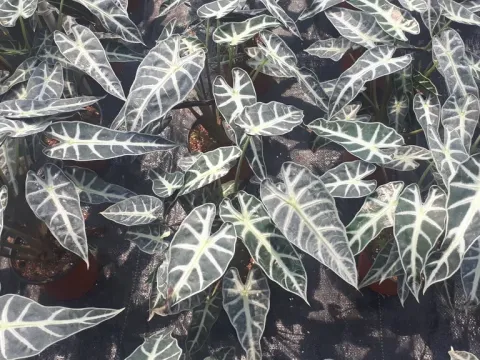
Alocasia
Alocasia
Alocasia is a genus of rhizomatous or tuberous broad-leaved perennial flowering plants from the Araceae family. Originating from tropical and subtropical regions of Asia and eastern Australia, these plants are known for their distinct, often massive foliage.
What the section contains
 Alocasia chaii
Alocasia devansayana
Alocasia devansayana
Alocasia chaii
Alocasia chaii
Alocasia devansayana
Alocasia devansayana
 Alocasia fornicata
Alocasia hybrids
Alocasia hybrids
Alocasia fornicata
Alocasia fornicata
Alocasia hybrids
Alocasia hybrids
 Alocasia lindeni
Alocasia lindeni
Alocasia lindeni
 Alocasia lowii
Alocasia lowii
Alocasia lowii
 Alocasia melo
Alocasia melo
Alocasia melo
 Alocasia portei
Alocasia portei
Alocasia portei
 Alocasia puber
Alocasia puber
Alocasia puber
 Alocasia reversa
Alocasia reversa
Alocasia reversa
 Alocasia robusta
Alocasia robusta
Alocasia robusta
 Alocasia sarawakensis
Alocasia sarawakensis
Alocasia sarawakensis
 Alocasia scabriuscula
Alocasia scabriuscula
Alocasia scabriuscula
 Alocasia sinuata
Alocasia sinuata
Alocasia sinuata
 Amazonian Alocasia
Alocasia amazonica
Amazonian Alocasia
Alocasia amazonica
Alocasia
Agricultural success with Alocasia depends heavily on replicating its native rainforest environment. This involves maintaining temperatures between 22 and 28 degrees Celsius and preventing any exposure to frost or cold drafts, which are fatal to the crop.
Soil requirements involve a highly porous, well-draining, and acidic to neutral medium. A mixture of perlite, peat moss, and pine bark is often recommended to prevent waterlogging and to ensure roots receive sufficient oxygen.
Light management is crucial, as Alocasia thrives in bright, indirect light. Full sun exposure typically causes leaf scorch, while low light conditions result in poor development and susceptibility to physiological disorders.
Beyond its ornamental value, certain Alocasia species are cultivated for food. Their corms contain starch that, once processed to remove calcium oxalate crystals, serves as a significant carbohydrate source in various traditional diets.
The main pests targeting Alocasia include spider mites, mealybugs, and scale insects. These organisms exploit the high humidity of the environment, making regular manual inspections of leaf undersides necessary.
Root rot caused by Phytophthora or Pythium species is the most devastating disease for this crop. It is almost exclusively triggered by over-irrigation and poor drainage in the growing container or field site.
Leaf spot diseases, often caused by fungi like Alternaria or Colletotrichum, appear as dark brown lesions on the foliage. These require immediate removal of infected leaves and the application of appropriate systemic fungicides.
Environmental stress, such as sudden shifts in humidity or water quality (excessive salinity), can mimic disease symptoms, leading to tissue chlorosis and necrosis that weakens the plant's natural defenses.
Integrated pest management (IPM) protocols, including the use of neem oil for mild infestations and the maintenance of optimal hygiene in the growing space, are standard practices to keep the crop healthy and productive.