
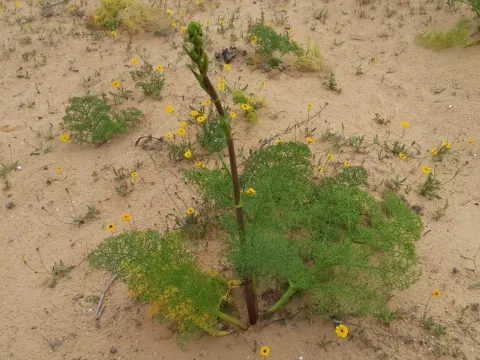
Ferula sinaica
Ferula sinaica
Sowing Ferula sinaica seeds is ideally performed during the autumn months to allow for a natural stratification process which enhances germination rates.
What the section contains
Ferula sinaica
Seeds should be placed at a depth of approximately 1 to 2 centimeters in a well-prepared seedbed to ensure successful emergence of the seedlings.
Utilizing a sandy, well-draining substrate is essential to prevent moisture accumulation around the developing roots during the early stages of growth.
Growth begins with the formation of a basal rosette, which requires the removal of surrounding weeds to prevent nutrient and light competition.
Constant, moderate temperature levels during the germination phase will support the most robust development of the young plant sprouts.
Ferula sinaica belongs to the Apiaceae family and is recognized as a hardy perennial species, historically adapted to arid and semi-arid landscapes.
The plant thrives in full sun exposure, requiring direct solar radiation to maintain its physiological functions and promote the synthesis of essential compounds.
Soil conditions should be characterized by a neutral to slightly alkaline pH and excellent drainage, which is vital for preventing crown rot in this species.
Due to its native habitat, the plant possesses a remarkable tolerance to drought, making it suitable for regions with limited rainfall patterns.
Adequate soil aeration is necessary to support the deep taproot system, which is a hallmark feature of the botanical development of this culture.
The most significant threat to Ferula sinaica is waterlogging, which often leads to rapid deterioration and fungal infection of the root systems.
Pests such as aphids and spider mites can infest the foliage, particularly during the early spring growth flush, necessitating careful monitoring.
Powdery mildew may occur if planting densities are too high, restricting airflow and creating localized pockets of high humidity around the plants.
Soil-borne larvae and various insects can cause damage to the underground parts, suggesting the need for soil sanitation before planting.
Effective management focuses on avoiding over-irrigation and maintaining proper plant spacing to minimize the risk of environmental and biological stress.