
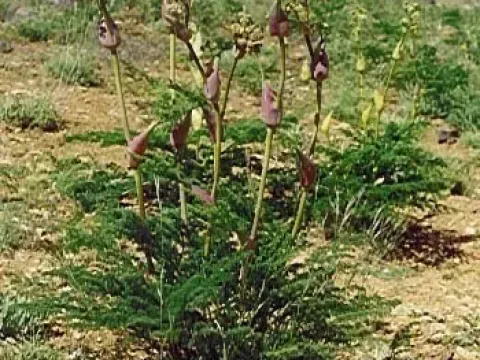
Ferula negevensis
Ferula negevensis
Sowing Ferula negevensis requires careful management of seed dormancy, which is an evolutionary mechanism adapted to desert conditions. Seeds typically require a period of cold stratification to simulate the winter rains of their natural habitat before germination can occur.
What the section contains
Ferula negevensis
The optimal sowing time is during late autumn, ensuring the seeds are exposed to natural seasonal temperature fluctuations. Placing seeds at a depth of 2 to 3 centimeters provides sufficient cover against desiccation while allowing emergence.
Maintaining consistent but not excessive moisture in the seedbed is crucial during the germination phase. Any waterlogging during this period is detrimental and can lead to the rapid decay of the delicate embryo.
Given the rosette-forming nature of the species, proper spacing is essential to ensure adequate airflow and light penetration. It is recommended to maintain a distance of at least 60 centimeters between plants to support healthy crown development.
Direct seeding is highly recommended over transplanting because the taproot of Ferula negevensis is highly sensitive to disruption. Minimizing disturbance to the root system during the establishment phase is key to successful cultivation.
Ferula negevensis is a specialist of arid landscapes and demands full sun exposure to thrive. Cultivation in shaded areas leads to stunted growth, reduced photosynthetic efficiency, and increased susceptibility to various pathogens.
The crop performs best in well-drained, sandy, or gravelly soils that mirror the soil texture of the Negev desert. High aeration is vital to prevent root rot, as the species is intolerant of heavy, compacted, or moisture-retentive clay soils.
Adaptation to high temperature variations is a signature trait of this plant. While it exhibits extreme drought tolerance once established, supplemental irrigation during the spring growth flush can significantly enhance vegetative biomass.
Nutrient requirements for this crop are relatively low compared to intensive agricultural species. Over-fertilization, especially with nitrogen, can compromise the chemical composition of the plant tissues and invite pest infestations.
Wind exposure is generally well-tolerated, as the plant is evolved to withstand the breezy conditions of its native environment. However, protective barriers may be needed for very young seedlings during extreme desert storms.
Fungal pathogens associated with excessive soil moisture pose the greatest threat to Ferula negevensis plantations. Root rot, caused by various soil-borne fungi, can lead to total crop failure if soil drainage is not perfectly maintained.
Sucking insects such as aphids are frequent pests, particularly in spring when the plants produce tender new leaves and reproductive shoots. Early identification and manual removal or biological control are preferred over heavy chemical usage.
Nematode infestations can severely impair root health, leading to decreased vigor and overall yield loss. Implementing a strict crop rotation schedule helps in managing soil-borne pest populations and maintaining long-term land productivity.
Weed control is critical during the first year, as the plant has a slow initial growth rate. Young seedlings are easily overwhelmed by faster-growing invasive grasses, requiring diligent maintenance and frequent manual weeding.
Regular monitoring of the leaf surface and stem bases is essential to detect early signs of bacterial or viral infections. Maintaining a dry, well-ventilated crop environment is the most effective preventative strategy against most diseases.