
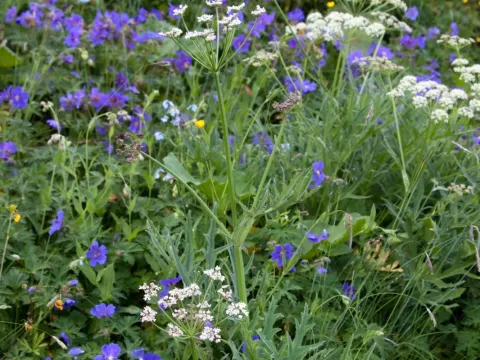
Freyn's Cow Parsnip
Heracleum freynianum
Heracleum freynianum, commonly known as Freyn's Cow Parsnip, is a perennial herbaceous plant belonging to the Apiaceae family, native to the Caucasus mountain ranges.
What the section contains
Freyn's Cow Parsnip
Propagation is primarily achieved through seeds, which generally require a period of stratification to break dormancy and ensure high germination rates in the field.
Sowing should be performed in well-drained, nutrient-rich soil, with seeds buried at a shallow depth of approximately 2-3 centimeters to allow for adequate oxygen access.
During the initial vegetative stage, the plant focuses on developing a robust basal rosette of leaves, which serves as a reserve for subsequent rapid growth and flowering.
Spacing is a critical factor in the successful development of this species, as it requires adequate room for both root expansion and aerial foliage development to ensure plant health.
This species thrives in mountain conditions, preferring cool, humid climates characteristic of subalpine meadows, where seasonal temperature shifts are well-defined.
The ideal soil substrate for Freyn's Cow Parsnip consists of fertile loam with good water-holding capacity but excellent drainage to prevent root rot during wet periods.
The plant demonstrates a strong affinity for light and typically performs best in open or semi-shaded areas where it can access sufficient photosynthetically active radiation.
Maintaining soil pH in the neutral range is highly beneficial for nutrient uptake and ensures the overall vigor of the plant throughout the growing season.
Given its natural origin in high-altitude environments, the plant is inherently frost-tolerant, showing remarkable resilience to the fluctuating climate of mountainous regions.
Fungal diseases, such as powdery mildew and various leaf spot pathogens, represent the most significant threats to plant health, especially under conditions of high relative humidity.
Insect pests, including various aphids and specific curculionids that target the Apiaceae family, can cause significant damage to foliage and developing inflorescences.
Soil-borne pests like larvae of certain beetles can weaken the root system, making the plant more vulnerable to secondary infections and environmental stress.
Cultural practices such as proper plant spacing and avoiding waterlogging are essential strategies for mitigating the impact of both diseases and pest infestations.
Integrated management approaches, including early detection and targeted treatments, are recommended to maintain the health of the specimens in an agricultural or botanical collection.