
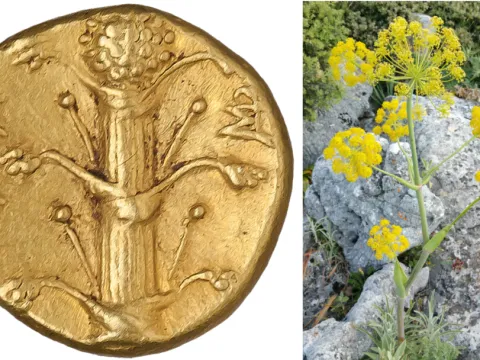
Ferula orientalis
Ferula orientalis
Ferula orientalis is a perennial herbaceous plant belonging to the Apiaceae family. The seeds have a dormancy period, so autumn sowing is recommended to allow for natural cold stratification during the winter months, which ensures better germination in the spring.
What the section contains
Ferula orientalis
For spring planting, seeds must undergo artificial cold stratification at temperatures between +2 and +5 degrees Celsius for at least 6-8 weeks. Planting depth should be maintained at approximately 1.5 to 2 centimeters in well-prepared, friable soil.
During the first year, the plant develops a modest basal rosette and begins building its deep taproot system. It is critical to keep the fields free of weeds during this establishment phase, as the young plants are slow to develop and sensitive to competition.
Spacing should be managed at 60-70 centimeters between rows to allow for optimal development of the mature plant. Direct sowing is always preferred over transplanting, as the taproot is extremely susceptible to breakage and damage during moving.
Germination is generally slow and often irregular, which requires consistent soil moisture in the top layer. Once established, the root system becomes highly efficient at accessing deep water resources.
Ferula orientalis is a sun-loving and drought-resistant species, natively found in arid to semi-arid regions. It performs best in open locations with high solar radiation and requires minimal water once the root system is well-developed.
The ideal soil is well-drained, loose, and sandy or light loam with neutral to slightly alkaline pH. Stagnant water and heavy, compacted clay soils must be avoided, as they quickly trigger root rot and inhibit growth.
This crop is hardy and tolerant of significant diurnal temperature fluctuations, typical of its native steppe habitats. It does not require intensive fertilization, though a balanced application of phosphorus and potassium can support root growth on nutrient-poor sites.
Consistent aeration of the soil surface is beneficial for early development. The crop has a deep taproot that penetrates the soil profile, so deep tillage before planting is recommended to ensure no hardpan layers impede the vertical growth.
Winter hardiness is high, allowing for successful cultivation in various temperate climates. However, the plant requires a distinct rest period in summer, during which the above-ground part naturally dies back.
Agricultural yields of Ferula orientalis vary based on whether the primary goal is green biomass or root harvest. In the flowering stage, the green mass can yield up to 10-15 tons per hectare, providing useful forage if managed correctly.
For medicinal purposes, the harvest of roots is the primary objective. Yields of dried root material typically reach 2-3 tons per hectare when harvested after 3-4 years of growth, which is when the concentration of active chemical compounds peaks.
Seed production is consistent, usually yielding between 300 to 500 kilograms per hectare. Harvesting must be timed precisely, as the seeds shatter easily upon full maturity when exposed to wind.
Climatic factors strongly influence yields; specifically, dry and warm conditions during the flowering and seed-setting phase are essential for high-quality outcomes. Excessive moisture can lead to a significant decrease in both root quality and seed weight.
Economic profitability depends on the specific end-use, with high value placed on pharmaceutical-grade extracts obtained from the plant's roots or resins.
Ferula orientalis is generally robust due to its complex chemical profile, which acts as a natural deterrent to many common agricultural pests. However, improper field management can lead to localized issues.
Wireworms are the most significant threat to young plants, as they target the root system. Effective management includes crop rotation and pre-planting soil treatment to reduce the population of soil-borne larvae.
Fungal diseases like Fusarium wilt may occur in poorly drained, wet conditions. Proper irrigation management and selecting fields with high natural drainage are the most effective preventive measures against these pathogens.
While rare, aphids or umbellifer-specific moths can affect flowering heads, impacting seed yield. Integrated pest management strategies using biological controls are recommended if pest populations exceed economic thresholds.
- Wireworms (root damage);
- Fusarium wilt (associated with waterlogging);
- Powdery mildew (in high-humidity environments);
- Umbellifer moth (seed head damage).
Harvesting for biomass is conducted at the start of the flowering phase. The stems are cut 10-15 centimeters above the ground to preserve the growing point, which allows the plant to potentially produce growth in subsequent years.
Seed harvesting is performed using a two-stage approach: cutting the flowering heads when they start turning brown and allowing them to dry in windrows before threshing to prevent excessive mechanical loss.
Root harvesting is done in late autumn or early spring when the plant is dormant. The roots are excavated, thoroughly cleaned of soil, and immediately dried to prevent degradation of the essential oils.
Drying must be conducted in well-ventilated, shaded areas at temperatures not exceeding 45 degrees Celsius. Overheating results in the loss of volatile compounds and significantly reduces the market quality of the raw material.
Storage of the finished product should be in cool, dark, and dry conditions. Proper packaging in paper bags or breathable containers is essential to prevent moisture accumulation and chemical oxidation during storage.