
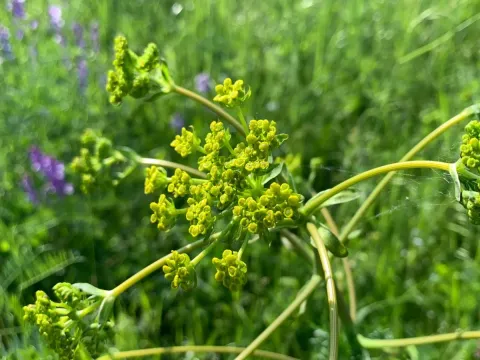
Ferulago
Ferulago
Sowing Ferulago is most effectively performed in the autumn, allowing seeds to undergo natural stratification during the winter months. This approach ensures higher germination rates compared to spring sowing, as the seeds require exposure to low temperatures to break dormancy.
What the section contains


Ferulago
Seeds should be planted at a depth of 1 to 2 centimeters. It is crucial to maintain adequate moisture in the topsoil during the germination period, as young seedlings are particularly vulnerable to surface dehydration.
The optimal row spacing is between 45 and 60 centimeters. This provides sufficient space for proper airflow and facilitates mechanical weeding and cultivation throughout the vegetative period.
Seeding density depends on the intended use, whether it is for biomass production or seed multiplication. High planting density for seed production can sometimes lead to lodging during the maturation phase, so a moderate density is recommended.
The plant develops slowly during its first year, making weed control essential. Choosing fields free from perennial weeds before planting significantly reduces the need for herbicide application later on.
Ferulago is a genus of perennial herbaceous plants belonging to the Apiaceae family. It is characterized by a deep, sturdy taproot system, which allows the plant to thrive even in arid conditions once it is well-established.
The ideal soil for Ferulago is a fertile loam or sandy loam with a neutral pH. The plant does not tolerate waterlogged soils or areas with high water tables, as excess moisture leads to root rot and poor development.
This crop is highly light-demanding, so it should be planted in open, sunny locations. Shaded areas significantly reduce the concentration of essential oils in the plant, which are the primary economic value of the species.
Ferulago is well-adapted to varying temperatures, demonstrating resilience to both summer heat and winter frosts. Its hardiness makes it suitable for cultivation across a broad range of temperate climatic zones.
Balanced mineral nutrition is important for high yields. Providing adequate phosphorus and potassium helps strengthen the root system and improves the plant's ability to survive its first winter, which is the most sensitive period in its life cycle.
The yield of Ferulago gradually increases over the first three years of growth. Peak biomass production is typically reached in the second and third years after planting, once the plant has fully developed its canopy and root system.
Harvesting for biomass should occur during the active flowering phase, as this is when the concentration of bioactive compounds and essential oils reaches its maximum potential, which is critical for pharmacological use.
Seed yield varies depending on weather conditions during the flowering season. With favorable conditions and a healthy population of pollinators, a well-managed field can provide stable seed production for several consecutive years.
The sustainability of the plantation depends on the frequency of harvesting. Moderate exploitation allows the plant to accumulate enough carbohydrates in the root system for successful overwintering and vigorous growth the following spring.
Overall, Ferulago is considered an economically viable crop for specialized farms focusing on medicinal or industrial raw materials, provided that proper agronomic practices are strictly followed throughout the production cycle.
The primary threat to Ferulago plantations is root rot, which is usually a result of poor field drainage and excessive soil moisture. Preventive measures focus on site selection and ensuring proper water management.
Among pests, various species of aphids and true bugs can damage young tissues and inflorescences. Regular monitoring of the field is necessary to detect infestations early and apply corrective measures before the damage becomes significant.
Weed management remains a critical agronomic challenge. The presence of aggressive perennial weeds can lead to soil depletion and a substantial reduction in the overall health and yield of the Ferulago crop.
Crop rotation is vital. It is strictly advised to avoid planting Ferulago after other members of the Apiaceae family, as this increases the risk of soil-borne diseases and persistent pest cycles that are common to the entire family.
Incorrect fertilization can weaken the plant's immunity. Excess nitrogen, in particular, can make the tissues more susceptible to fungal infections and decrease the plant's natural resistance to environmental stress factors.
Harvesting should be scheduled for sunny days when moisture content in the plant tissues is at its lowest. This facilitates faster drying times and helps preserve the volatile essential oils present in the biomass.
The harvesting technology depends on the end goal. For herbal mass, forage harvesters with pick-up attachments are used, whereas for seeds, combines are adjusted to ensure a gentle threshing process to avoid mechanical damage.
Once harvested, raw materials must be transported to the processing site immediately. Leaving harvested mass in the field for extended periods can result in heating and microbial degradation, rendering the material unfit for use.
Drying is performed in controlled environments at temperatures not exceeding 40 degrees Celsius. It is crucial to avoid over-drying, as this can make the material brittle and cause a loss of valuable aromatic components during handling.
For long-term storage, seeds should be kept in breathable bags in a well-ventilated warehouse. Maintaining storage humidity below 60 percent is essential to ensure the longevity and viability of the stored material.