
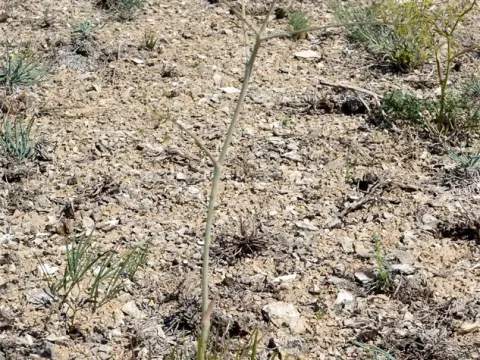
Ferula longifolia
Ferula longifolia
Ferula longifolia is a perennial herbaceous plant, and for agricultural purposes, late autumn sowing is typically recommended to allow for natural seed stratification during winter. The ideal time for planting is when soil temperatures drop consistently below 8 degrees Celsius.
What the section contains
Ferula longifolia
Seeds possess a long dormancy period, necessitating proper preparation before planting. In industrial farming, seeds are sown in rows spaced 60–70 centimeters apart to provide sufficient growing space for root development.
The seeds should be planted at a depth of 2–3 centimeters in well-drained, sandy loam soils. If spring planting is unavoidable, seeds must undergo cold stratification at 0 to 4 degrees Celsius for 45 days to ensure uniform germination.
Germination requires moderate soil moisture, as waterlogged conditions can lead to embryo rot. Seedlings appear once the soil warms to 12–15 degrees Celsius, and protection from early-season drought is vital for healthy establishment.
During the first year, plants grow slowly, focusing on developing a basal rosette of leaves. Weed control during this initial stage is critical to prevent competition and ensure the plant gains enough vigor for the following years.
As a member of the Apiaceae family, Ferula longifolia has specific environmental needs typical of arid Eurasian zones. It thrives in deep, well-drained chestnut or sierozem soils with a neutral or slightly alkaline pH level.
The crop is highly light-demanding and should be situated on south-facing slopes with maximum sunlight exposure. Any form of shading will significantly reduce the accumulation of bioactive compounds in the roots and foliage.
Water requirements are moderate, thanks to the plant's deep taproot system, which allows it to tolerate temporary drought. However, for maximum biomass production, supplemental irrigation during the active leaf-growth phase is highly recommended.
The plant demonstrates excellent winter hardiness, making it suitable for continental climates with harsh winters. It adapts well to temperature fluctuations, provided the soil remains free of water accumulation during the dormant season.
Effective soil drainage is the most important factor in site selection. Avoiding low-lying areas with high groundwater levels is mandatory, as standing water during winter often leads to crown rot and total crop failure.
Yield for Ferula longifolia is measured by the dry matter of either roots or aerial parts, depending on the commercial application. By the third or fourth year of growth, average root yields range from 15 to 25 centners per hectare.
Root development is a cumulative process, and biomass increases significantly as the plant matures. The peak concentration of medicinal compounds is typically reached during the full flowering stage of the plant.
When grown for its essential oils, the aerial biomass can yield up to 100–120 centners per hectare. Harvesting should occur at the onset of the budding or early flowering stage for optimal oil content.
Strategic application of potassium fertilizers is known to improve root structure and overall plant resilience, leading to higher final yields. Balanced nutrition is vital for consistent production cycles.
A planting density of 40,000 to 50,000 stems per hectare is recommended to ensure profitability and effective land use. Exceeding this density may lead to overcrowding and stunted growth in mature plants.
Fungal infections, particularly powdery mildew, are the primary disease threats, usually appearing during periods of high humidity or poor ventilation in dense plantings. Proper spacing and airflow are essential for prevention.
Insect pests, such as various species of umbellifer-feeding bugs, can cause damage to the flower stalks, reducing seed quality and harvest volume. Monitoring for insect populations is a standard requirement for crop protection.
Wireworm larvae are a significant threat as they feed on the taproot. These wounds often allow bacterial infections to enter, leading to root rot and systemic failure of the plant in a field setting.
Late blight can be a risk during excessively wet summers, necessitating the use of approved copper-based fungicides to protect the foliage and maintain plant health throughout the season.
Implementing a strict 5–7 year crop rotation cycle is the most effective way to prevent the buildup of soil-borne pathogens and maintain long-term plantation health.
Root harvesting is performed during the dry season once plants reach their third or fourth year. After excavation, roots are cleaned, washed, and dried at temperatures not exceeding 50 degrees Celsius to preserve efficacy.
Mechanical harvesting of the aerial parts is done using mowers set to leave a 10–15 centimeter stubble, which protects the growth point of the plant and encourages regrowth in the following season.
Seeds are harvested selectively as the umbels turn brown. Precision is required to prevent natural shattering and seed loss, which can occur rapidly if the crop is not harvested at the peak of maturity.
Post-harvest, the seed material is dried in shaded, ventilated areas before threshing and cleaning. Bringing moisture content down to 10–12 percent is necessary for long-term storage and quality stability.
Meticulous harvest management ensures that the resulting pharmacological raw material meets industry standards, maximizing the return on investment for the agricultural producer.