
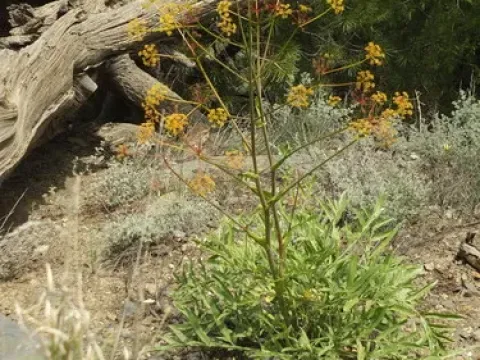
Ferula jaeschkeana
Ferula jaeschkeana
Sowing Ferula jaeschkeana is best performed in late autumn. Natural winter stratification is essential for breaking seed dormancy and ensuring uniform germination during the following spring.
What the section contains
Ferula jaeschkeana
If spring sowing is required, seeds must undergo cold stratification in a controlled environment for at least 8 to 12 weeks. Lack of proper preparation results in very poor germination rates.
The seeds should be covered lightly with 1–2 cm of soil, as they require stability but are sensitive to deep burial. The seedbed must be kept weed-free to prevent competition with slow-growing seedlings.
Recommended row spacing is about 50–60 cm. This provides enough space for the plants' expansion over their long development cycle before the flowering stage.
Irrigation during the first weeks after germination is critical. Once the taproot becomes established, the plant gains higher resistance to environmental stress.
Ferula jaeschkeana requires full sun exposure for optimal growth. It is a heliophilous species that performs poorly in shaded areas, leading to weak stems and low productivity.
The plant prefers well-drained, sandy, or rocky soils. It is highly adapted to arid conditions and cannot survive in waterlogged or heavy, poorly aerated soil types.
Temperature range should be moderate, with the plant showing significant resilience to high heat. It thrives in regions where the growing season coincides with dry spells.
Key botanical and biological characteristics include:
- Member of the Apiaceae (Celery/Carrot) family.
- Features a deep, fleshy taproot system.
- Monocarpic behavior (blooms once and then dies).
- High content of bioactive resins and essential oils.
Soil fertility can be managed with organic amendments before sowing. It adapts well to low-nutrient soils, but high organic content accelerates early vegetative growth.
The primary threat to the crop is root rot caused by stagnant water in the root zone. Proper soil drainage is the most effective preventive measure against this problem.
Powdery mildew may occur if planting density is too high, preventing air circulation. Thinning out the plants can effectively manage this risk in humid environments.
Aphids and mites are common pests that attack the foliage. Their presence can be identified by the curling and yellowing of the leaves in the early spring period.
Soil-borne larvae may occasionally feed on the taproots, potentially leading to bacterial infections. Field monitoring is advised during the first three years of growth.
Integrated pest management, focusing on biological controls and proper site preparation, is preferred to maintain the purity of the medicinal raw materials.
Root harvest is usually conducted in late autumn, ideally in the fifth or sixth year of growth. This is when the concentration of gums and resins in the roots is at its peak.
Seed harvesting should be performed as soon as the fruits change color to brown but before natural dehiscence occurs. Timeliness is critical to prevent yield loss from shedding.
After excavation, the roots should be cleaned, sliced into sections, and dried. Drying must be done in a shaded, well-ventilated area to protect sensitive compounds.
Heat during the drying process should not exceed 45 degrees Celsius. Exceeding this limit leads to the degradation of volatile essential oils and diminished quality.
Final storage should be in clean, breathable containers placed in a cool, dry environment. This ensures the longevity of the chemical properties of the harvested material.