
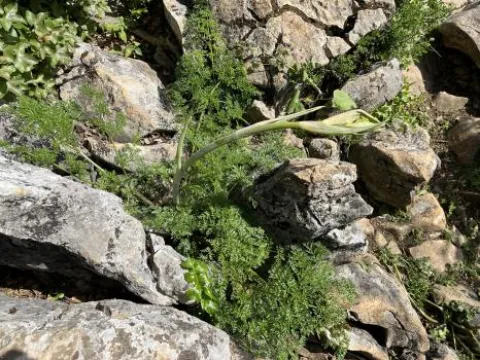
Ferula heuffelii
Ferula heuffelii
Ferula heuffelii is a perennial herbaceous plant belonging to the Apiaceae family. It is naturally occurring in the mountainous regions of Southeastern Europe, where it thrives in rocky and well-drained environments.
What the section contains
Ferula heuffelii
The plant requires high levels of solar radiation to develop properly and reach its maximum potential for producing secondary metabolites. Its deep-reaching taproot system allows it to persist even in conditions with limited precipitation.
Cultivation should take place in well-drained, lime-rich, or stony soils that maintain a neutral to slightly alkaline pH. Heavy, water-retaining clay soils should be avoided at all costs as they lead to root rot.
This species is exceptionally cold-hardy, well-adapted to the sharp temperature fluctuations found in highland habitats. Moderate temperatures during the growing season support optimal leaf and stalk development.
Agricultural management is relatively low-intensity, focusing primarily on soil preparation and drainage. Farmers must prioritize maintaining dry soil conditions during the winter dormancy period to ensure plant longevity.
The primary threats to Ferula heuffelii include fungal infections resulting from poor soil aeration and waterlogging. Fusarium-related wilting is common when soil moisture exceeds optimal levels for prolonged periods.
Insects that inhabit the soil, such as grubs and wireworms, pose a significant threat to the root system, potentially causing stunted growth or total plant failure if left unmanaged.
Preventative measures center on site selection, opting for elevated areas or slopes that facilitate natural water drainage. Adding coarse gravel to the planting hole can significantly improve soil aeration.
Monitoring for signs of powdery mildew is recommended during the humid spring months. If detected, treatment must be aligned with organic farming practices to ensure the quality of the harvested parts.
Consistent field scouting allows for the identification of early signs of decline, enabling immediate isolation of affected plants to prevent the further spread of pathogens across the plantation.