
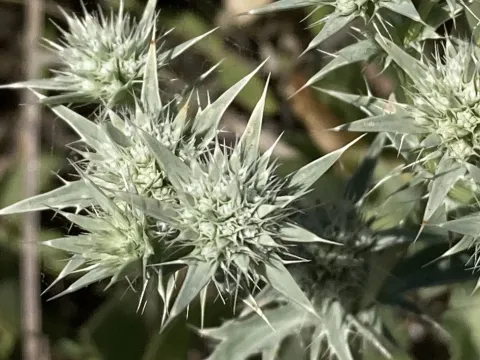
Eryngium aristulatum
Eryngium aristulatum
Eryngium aristulatum is a perennial herbaceous plant typically propagated by seeds. Sowing is best performed in late autumn for outdoor germination or in early spring under controlled indoor conditions to establish strong seedlings before the summer heat.
What the section contains
Eryngium aristulatum
Seed germination requires a period of cold stratification lasting approximately one month. This process mimics natural winter conditions, effectively breaking dormancy and ensuring a significantly higher success rate for uniform seedling emergence.
When starting indoors, maintain a temperature range between 18 and 20 degrees Celsius. Use a well-draining, sterile potting mix to prevent damping-off, a common issue with Apiaceae seedlings during their early developmental stages.
Pricking out should be done with extreme care, as the plant develops a deep taproot early on, making it sensitive to transplanting shock. Biodegradable pots are recommended to allow for direct soil planting without disturbing the root structure.
Transplanting to the permanent site occurs once the danger of frost has passed in late spring. Maintain a spacing of 45 to 50 centimeters between plants to allow for proper airflow, which is essential for the healthy development of this species.
This species, belonging to the Apiaceae family, originates from North American regions and has adapted to diverse climatic conditions. It thrives in full sun, which is essential for maintaining its structural integrity and intense, characteristic coloration.
Soil requirements for Eryngium aristulatum include excellent drainage and moderate to low nutrient levels. Heavy, clay-rich soils are unsuitable unless amended with gravel or sand to create a porous structure that prevents root rot.
The plant is highly drought-tolerant once established, possessing a robust root system capable of accessing water deep within the soil profile. Minimal irrigation is required after the initial establishment phase, making it a sustainable choice for water-wise gardens.
A neutral to slightly alkaline soil pH is ideal for this crop. In highly acidic environments, the application of agricultural lime may be necessary to optimize nutrient uptake and prevent the yellowing of leaf tissues, which often indicates nutrient imbalance.
General maintenance involves light weeding during the first season of growth to ensure the plants are not overtaken by faster-growing species. Once the root system is well-developed, the plant becomes highly resilient and requires little ongoing maintenance.
The most frequent health issues in Eryngium aristulatum include powdery mildew and various forms of root and crown rot. These conditions are typically exacerbated by stagnant water or inadequate spacing that limits the airflow around the foliage.
Prevention relies on strict moisture control and ensuring the planting site has sufficient light exposure. Removal of infected plant debris is essential to stop the spread of fungal spores during humid weather conditions in the mid-summer season.
Pests such as aphids and spider mites can occasionally affect the plant, particularly in stressed specimens. These insects congregate on the undersides of leaves or near the flower stalks, leading to stunted growth and visible leaf disfigurement.
Biological pest control is preferred to protect pollinator populations, as the plant is a prolific nectar source for bees and butterflies. Avoid broad-spectrum chemical insecticides whenever possible, opting instead for targeted, eco-friendly solutions.
Proper crop management, including regular monitoring of plant health and maintaining good environmental hygiene, significantly reduces the need for chemical intervention, ensuring the long-term health and aesthetic appeal of the plantation.