
Daucus broteri
Daucus broteri
Daucus broteri is a wild plant species belonging to the Apiaceae family. While taxonomically related to the common carrot (Daucus carota), it is not a commercial vegetable crop and does not form edible fleshy taproots.
What the section contains
Daucus broteri
The plant is native to the Southwestern part of Europe, with its primary geographical distribution centered in the Iberian Peninsula. It is typically found in natural habitats within Spain and Portugal, often growing in wild meadows and scrublands.
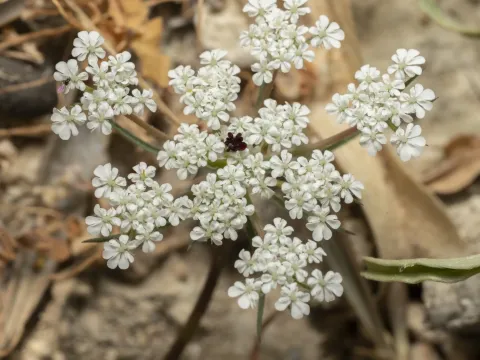
Botanically, Daucus broteri exhibits characteristic features such as deeply divided, fern-like foliage and complex umbels of white flowers. Unlike agricultural carrot varieties, its root structure is fibrous and woody, adapted for survival in wild soils rather than for human consumption.
Regarding environmental needs, this species thrives in Mediterranean climates characterized by long, dry summers and mild winters. It prefers well-drained, lime-rich soil types which are abundant in its native Mediterranean range.
Agricultural use of this plant is non-existent as a food source, but it remains significant for plant breeders and geneticists. Research focuses on its hardiness and drought-resistance traits, which could potentially be used to improve commercial carrot cultivars.