
Conioselinum chinense
Conioselinum chinense
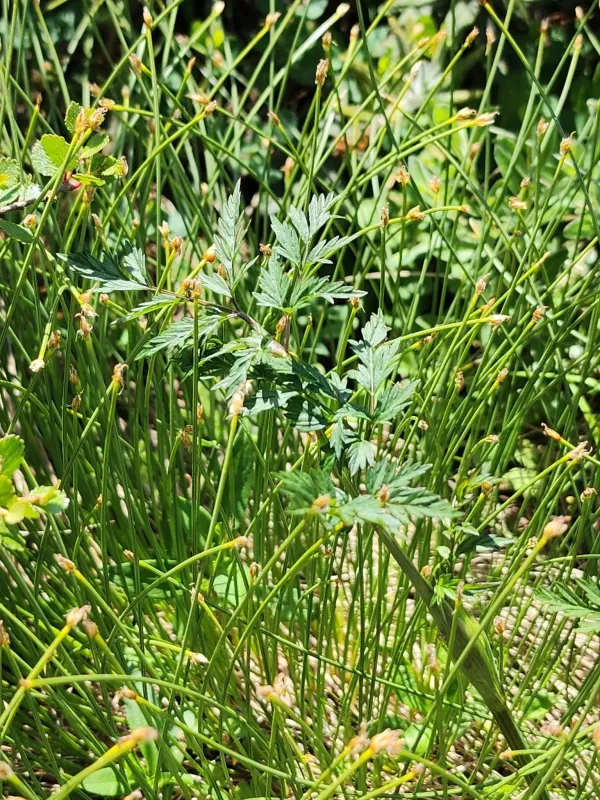
Description
Sowing dates
Sowing Conioselinum chinense is typically carried out in late autumn or early spring, as soon as the soil is ready for cultivation. Seeds require stratification, making autumn planting in open ground often more effective for achieving uniform germination.
Select sites with loose, well-aerated soil for sowing, as the small seeds need shallow covering—no more than 1–2 cm. Ensuring optimal moisture in the upper soil layer during the germination period is critical to success.
Seed density is adjusted based on the cultivation goal: for high-quality medicinal material, wide-row spacing of up to 45–60 cm is used. This allows for mechanized processing and ensures proper light access for the plants.
The optimal temperature for seed germination is 15–20 degrees Celsius. In cooler temperatures, emergence can be delayed, so the use of temporary film covers is recommended for early spring sowing.
Once seedlings emerge, thinning is performed to leave a distance of about 20–30 cm between plants. This is necessary to prevent overcrowding and to create conditions for the full development of the root system.
Growing requirements
Conioselinum chinense belongs to the Apiaceae family and is a perennial herbaceous plant. In its natural habitat, it grows in moist forests and meadows, which determines its high requirements for soil moisture and quality.
The crop prefers fertile, loamy, or sandy-loam soils with a neutral or slightly acidic pH. An important factor for successful growth is high organic matter content, so the application of humus or compost is highly desirable.
The plant is relatively shade-tolerant, but for maximum productivity, sites with diffused light are preferred. Direct sunlight during dry periods can inhibit the development of the aerial part of the plant.
Maintenance includes regular loosening of rows, which prevents soil crusting and promotes better root aeration. Irrigation is mandatory during dry summers, as moisture deficiency significantly reduces the yield of rhizomes.
The plant responds well to fertilization with complex mineral fertilizers during the period of intensive vegetative growth. It is important to monitor nitrogen levels to avoid excessive green mass growth at the expense of root development.
Yield
The yield of Conioselinum depends on the age of the plants and growing conditions. Usually, commercial production is harvested in the second or third year of life, when the roots accumulate the maximum concentration of bioactive compounds.
On average, significant amounts of raw material can be obtained per hectare with proper agricultural techniques, although exact figures vary by soil type. Yield evaluation is conducted based on the mass of cleaned rhizomes.
To increase output, soil mulching is applied, which helps retain moisture and suppress weed growth. This reduces labor costs for weeding and promotes a healthier root system.
Biological maturity of the raw material is determined by the state of the aerial part, which begins to yellow at the end of the season. Timely termination of vegetation is important for the accumulation of nutrients in the roots.
For industrial purposes, separate harvesting of seeds and rhizomes is practiced. Seed yields can also be significant if flower stalks are not pruned early, though this exhausts the plant's resources.
Main diseases and pests
Conioselinum chinense is susceptible to common Apiaceae diseases such as Septoria leaf spot and powdery mildew. These fungal infections develop particularly aggressively in high-humidity conditions with poor airflow.
Among pests, the carrot fly and aphids pose the greatest danger. They can damage both young leaves and the root system, leading to a decrease in the quality of the commercial raw material.
Crop rotation is recommended for disease prevention. Do not plant Conioselinum after other Apiaceae family representatives such as carrots, parsley, or dill.
Biological control methods, including the use of biofungicides, show high effectiveness. It is also important to remove affected specimens promptly to prevent the spread of infection to neighboring plants.
In cases of severe infestation, the application of approved insecticides and fungicides is permissible, but treatments must be stopped at least one month before the rhizome harvest.
Harvesting
Harvesting is performed in autumn when the aerial part of the plant begins to wither. At this time, the concentration of essential oils and other beneficial components in the rhizomes reaches its peak.
Rhizomes are carefully excavated using garden forks or mechanized diggers, taking care not to damage the tissue integrity. Injured roots lose their commercial value faster and are more susceptible to rot.
After removal from the soil, the raw material is thoroughly cleaned of soil residues and washed with running water. It is essential to remove small rootlets and damaged parts, as they lack value.
Drying is carried out in well-ventilated rooms or specialized dryers at a temperature not exceeding 40–45 degrees Celsius. Overheating can lead to the evaporation of volatile essential oils.
Correctly dried raw material should have a characteristic aroma and a brittle structure. Storage of the final product is done in dry, dark, and cool places, protected from pests and rodents.