
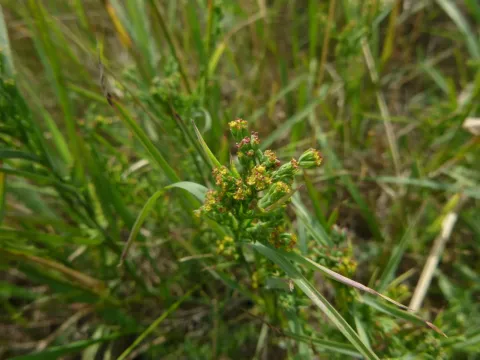
Bupleurum affine
Bupleurum affine
Bupleurum affine is a perennial herbaceous plant belonging to the Apiaceae family. Successful cultivation requires a deep understanding of its biological cycle, as seeds possess dormancy mechanisms and generally require stratification for germination.
What the section contains
Bupleurum affine
The preferred method of sowing is autumn planting in open fields. Winter temperatures provide the necessary cold treatment for the seeds to break dormancy, leading to uniform and robust germination during the following spring season.
For spring planting, seeds must undergo artificial stratification in damp sand or vermiculite at temperatures between 2 and 5 degrees Celsius for at least two months. Sowing depth should be shallow, approximately 1 to 2 centimeters deep.
Maintain consistent soil moisture after sowing to ensure that the delicate root systems of the emerging seedlings do not dry out. Spacing should be sufficient to accommodate the mature plant's size, typically keeping rows at least 45–60 centimeters apart.
Growth during the first year is primarily focused on the development of the root system and the basal rosette of leaves. Early weed control is crucial during this establishment phase, as the plant is slow to compete with aggressive weeds.
This species thrives in well-lit environments and prefers full sun exposure. Inadequate lighting results in weak stem elongation and a significant decrease in the concentration of secondary metabolites, which are essential for its medicinal value.
Soil requirements are moderate, with the plant favoring light, well-draining loams or sandy-loam soils. It is critical to avoid waterlogged conditions, as the plant is highly susceptible to root rot when exposed to excessive moisture.
Bupleurum affine is winter-hardy and adapted to temperate climates. It tolerates cold winters well, provided the soil drainage is efficient, preventing ice formation around the crown of the plant during freeze-thaw cycles.
Fertilization should prioritize phosphorus and potassium to strengthen the root system and improve chemical composition. Excess nitrogen should be avoided as it stimulates excessive foliage at the expense of root quality and plant stability.
The plant performs best in neutral to slightly alkaline soil conditions. If the site has heavy clay soil, amending the planting rows with organic matter or grit can significantly improve aeration and overall crop performance.
Root rot is the most significant threat to Bupleurum affine, particularly in poorly drained soils or during prolonged wet weather. Prevention relies on proper soil preparation and maintaining appropriate irrigation levels.
Common pests include aphids and plant bugs, which target the tender new growth. Integrated pest management strategies are recommended, focusing on early detection and maintaining ecological balance around the crop fields.
Powdery mildew may occur during periods of high humidity and fluctuating temperatures. This disease can affect the photosynthetic capacity of the plant and reduce the overall yield of high-quality biomass.
Strict adherence to crop rotation is essential to prevent the buildup of soil-borne pathogens. Avoid planting Bupleurum affine in fields that have recently supported other members of the Apiaceae family to minimize disease risk.
Chemical control measures should be used with extreme caution, especially if the crop is intended for the pharmaceutical industry. Biological control agents or mechanical weeding are preferred to ensure the final product meets safety standards.
The optimal time for harvesting the aerial parts is during the peak flowering stage. At this point, the plant contains the highest concentration of bioactive compounds, making it the most valuable time for medicinal processing.
Harvesting involves cutting the stems 10 to 15 centimeters above the soil surface. This technique preserves the basal rosette and root crown, allowing the perennial plant to survive and continue its development for the next season.
Immediate processing after cutting is necessary to prevent degradation of active ingredients. Drying should be conducted in shaded, well-ventilated areas or specialized industrial dryers at temperatures not exceeding 45 degrees Celsius.
Roots may be harvested on a 3 to 4-year cycle. When harvesting roots, they must be cleaned thoroughly of soil and debris, washed in cold water, and dried rapidly to ensure quality and prevent molding during the curing process.
Finished dried biomass should be stored in cool, dark, and dry conditions. Using breathable packaging materials helps maintain the integrity of the plant materials for several years, ensuring long-term product stability.