
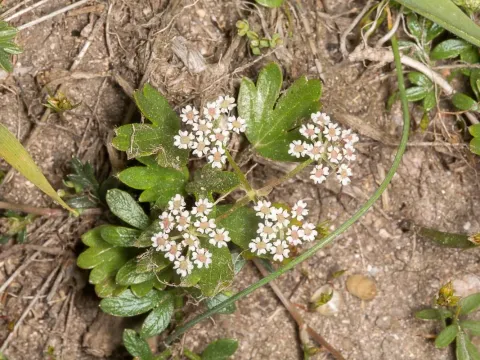
Bunium alpinum
Bunium alpinum
Bunium alpinum is a perennial herbaceous plant belonging to the Apiaceae family. Successful cultivation requires a deep understanding of its biological cycle, which includes a mandatory dormancy phase that can be overcome by cold stratification of the seeds.
What the section contains
Bunium alpinum
For best results, seeds should be sown in late autumn to experience natural winter temperatures. If spring sowing is necessary, seeds must be kept in a cold environment for at least 8 to 12 weeks to ensure high germination rates upon planting.
The seeds should be sown at a shallow depth of approximately 1 to 2 centimeters in well-drained, prepared soil beds. Row spacing should be kept between 30 and 45 centimeters to allow for proper airflow and routine maintenance activities between the rows.
Once seedlings have reached the two-leaf stage, thinning is recommended to maintain a distance of 15 centimeters between plants. This spacing is crucial for the development of healthy, high-quality tuberous roots which constitute the main economic yield.
Crop rotation is an essential agronomic practice for Bunium alpinum. Avoid planting in fields recently occupied by other members of the Umbelliferae family to prevent the buildup of soil-borne pathogens and specific crop-related pests.
The plant thrives in light, loamy, or sandy soils with neutral to slightly alkaline pH levels. Given its alpine origin, the soil must possess excellent drainage characteristics, as waterlogging is the primary cause of root system failure and plant death.
Bunium alpinum requires exposure to full sunlight or light partial shade to achieve optimal photosynthesis. It is highly adapted to cooler climates and can withstand significant temperature fluctuations, provided the root zone remains undisturbed by ice-heaving.
Irrigation management should be moderate, focusing on keeping the soil moist but not saturated. During the peak growing season, regular weeding is necessary because the plant is a poor competitor against faster-growing weeds and invasive grass species.
Nutrient requirements are modest; excessive nitrogen fertilization should be avoided as it encourages vegetative growth at the expense of root storage and essential oil concentration within the tubers.
Soil aeration via periodic light cultivation is beneficial, especially after heavy rains, to prevent surface crusting and improve oxygen supply to the roots, which supports metabolic efficiency in the developing plant.
The most significant threats to Bunium crops are carrot flies and aphids, which can devastate harvests if not controlled early. Integrated pest management, including the use of row covers, serves as an effective primary defense.
Fungal diseases like powdery mildew are common in high-humidity conditions or areas with poor air circulation. These infections can be mitigated by ensuring plants are spaced correctly and avoiding overhead irrigation methods during hot, humid afternoons.
Sanitation of the growing field is vital; removing dead plant debris at the end of the season reduces the overwintering sites for pathogens and insect larvae that target the Apiaceae family specifically.
Early detection through frequent field monitoring allows for localized treatment rather than whole-field application of fungicides. Biopesticides are preferred to maintain the quality and safety standards of the final product.
Consistent soil moisture balance serves as a prophylactic measure against various types of root rot. By ensuring the root zone does not remain anaerobic, the farmer can significantly reduce the risk of secondary infections.
The harvest phase typically occurs during the second or third year, once the plant has reached physiological maturity. Harvesting is triggered when the above-ground foliage begins to yellow and die back, signaling that nutrient translocation to the roots is complete.
Roots should be carefully extracted from the soil using mechanical or manual tools to prevent surface damage. Any bruising or skin breakage significantly decreases the shelf life and quality of the raw material post-harvest.
Immediately after harvest, the product should be cleaned, sorted, and dried in a well-ventilated, shaded environment. Direct sunlight should be avoided during the drying process to prevent the degradation of volatile essential oils.
Seed collection requires careful timing; the seeds should be harvested as soon as they turn brown but before they shatter naturally on the field. This ensures maximum yield and preservation of high-viability genetic material for subsequent seasons.
- Proper storage of dried roots and seeds requires cool, dark, and dry conditions to maintain their aromatic and pharmaceutical potency for extended periods.