
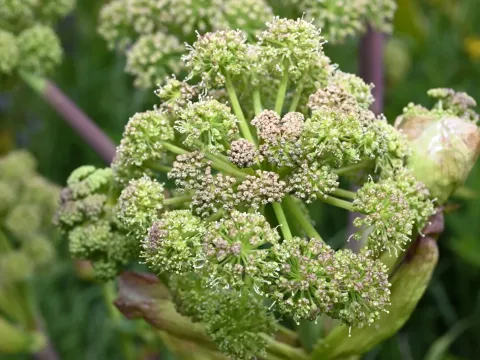
Broadleaf angelica
Angelica ampla
Broadleaf angelica (Angelica ampla) is a perennial herbaceous plant belonging to the Apiaceae family. In agricultural practice, seeds are typically sown in late autumn, as they require a prolonged stratification period under natural cold conditions to germinate effectively.
What the section contains
Broadleaf angelica
If spring sowing is chosen, seeds must undergo artificial cold stratification for 30 to 60 days before planting. The optimal sowing depth is 1–2 centimeters, as shallow sowing helps prevent the small seeds from drying out before they can establish roots.
Due to the plant's robust root system, adequate spacing between rows is essential for healthy development. A planting scheme of 50 by 50 centimeters is recommended to ensure proper sunlight penetration and air circulation around the plants.
Seedlings emerge relatively slowly, and during the first year of life, the plant primarily develops a rosette of basal leaves. Vigorous growth of the aerial part begins in the second year, when the plant produces a tall, sturdy flowering stem.
Selecting the right site is crucial, as the plant prefers open locations with good sunlight exposure, although it can tolerate light shade. Soil fertility is vital during the first year to ensure that young seedlings establish a strong foundation.
Broadleaf angelica thrives in deep, fertile soils rich in organic matter, with a neutral or slightly acidic pH. Ideally, the soil should be loamy, capable of retaining moisture while maintaining efficient drainage to prevent root issues.
The culture is moisture-loving and requires regular irrigation during dry spells, especially during the peak stem-growth phase. However, excessive waterlogging must be avoided, as it can cause the fleshy taproots to decay.
The plant responds well to the application of compost or well-rotted manure during site preparation. Mineral fertilization focusing on potassium and phosphorus supports better root system architecture and overall plant resilience.
Regional climate conditions should be moderate, as extreme temperature fluctuations during winter can be challenging. Broadleaf angelica is generally frost-hardy and can overwinter successfully if covered by a protective layer of snow.
Longer daylight hours during the summer season are necessary for the development of aerial mass and seed maturation. In areas with short summer days, flowering may be significantly reduced or fail to occur entirely.
The primary commercial product is the plant's root, which is harvested in the autumn of the second year. The average yield of dried roots depends heavily on soil quality and the precision of farming techniques applied on the plot.
The concentration of essential oils and bioactive compounds in the roots peaks by the autumn of the second year. With proper technology, a single hectare of plantation can produce several hundred kilograms of high-quality raw material.
In addition to the roots, the seeds also hold value and are collected as they reach maturity. Harvesting must be selective to prevent the shedding of the most mature seeds from the umbels.
Yield stability relies on preventing premature flowering during the first year of life; this requires the removal of any flower stalks that appear early. Consistent weeding and soil cultivation between rows are key to maximizing total production.
The use of crop rotation cycles helps reduce the risk of soil-borne pathogens and maintains high yields over several years of plantation operation.
Various species of aphids are the most significant pests for Broadleaf angelica, as they feed on young leaves and developing flower stalks. Timely treatment with biological insecticides can minimize potential crop damage.
Fungal diseases like powdery mildew may affect the foliage under conditions of high humidity and poor ventilation. Preventive measures include proper plant spacing and the removal of infected plant debris throughout the season.
Root rot poses a serious threat in waterlogged soils. It is critical to ensure proper drainage and avoid overwatering the plantation, especially during unusually wet growing seasons.
Caterpillars of certain butterfly species can consume the leaves, slowing the plant's overall growth. Regular visual inspection of the crops and manual removal of larvae are recommended during the early stages of infestation.
In cases of severe disease outbreaks, broad-spectrum fungicides may be used, provided that their application complies with safety regulations and ecological standards.
Harvesting of Broadleaf angelica roots takes place at the end of the second year of growth, just as the aerial parts begin to wither naturally. The roots are excavated, thoroughly cleaned of soil, and washed in cold running water.
Once cleaned, the roots are sliced into pieces to facilitate the drying process. Drying is conducted in well-ventilated rooms or specialized industrial dryers at temperatures not exceeding 40 degrees Celsius.
Seeds are harvested during the waxy stage of maturity by cutting off the umbels. These are dried in the shade, spread out in thin layers on a fabric base, and then threshed to separate the seeds from the stalks.
Properly dried raw material possesses a distinct aroma and retains its beneficial properties for several years if stored in airtight containers in a cool, dry place. Protection from moisture during storage is essential.
Agricultural waste, such as substandard roots or stems, can be repurposed as organic fertilizer through composting, contributing to a sustainable production cycle on the farm.