
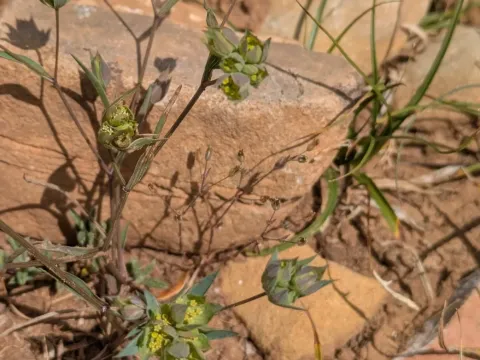
Bupleurum baldense
Bupleurum baldense
Bupleurum baldense is typically grown from seeds, with early spring being the preferred planting time to allow the plant to establish itself before the heat of summer arrives.
What the section contains
Bupleurum baldense
The seeds possess a relatively hard outer coat, so pre-soaking or stratification techniques are often recommended to improve the germination rate and ensure uniform emergence.
Planting depth should be kept shallow, approximately 1 to 2 centimeters, as the seeds require exposure to light and warmth for optimal and vigorous development.
Row spacing of about 30 to 40 centimeters is ideal for field cultivation, providing sufficient airflow and space for manual or mechanical weeding throughout the growing cycle.
It is important to keep the seedbed consistently moist but not waterlogged immediately after sowing until the seedlings reach the stage of two or three true leaves.
This species thrives in sunny, open locations, as it is highly sensitive to shade, which can inhibit its growth and lower the concentrations of beneficial bioactive compounds.
Well-drained, sandy-loam or light loamy soils with a neutral pH balance are the most suitable environments for achieving high-quality yields of this medicinal herb.
Proper drainage is critical for Bupleurum baldense, as the plant is prone to root rot if it is exposed to prolonged periods of saturated soil or standing water.
It is a relatively hardy plant that adapts well to various temperature fluctuations, but it shows optimal development when temperatures remain in the range of 18 to 25 degrees Celsius.
Regular maintenance, including shallow hoeing between rows, is necessary to minimize competition from weeds, especially during the slow early growth phases of the plant.
Fungal issues such as powdery mildew represent the primary disease threat, particularly in humid climates where poor air circulation exists within the plant canopy.
Pests that specifically target the Apiaceae family, such as aphids and specialized leaf miners, can damage the foliage and impact the overall vigor of the crop.
Implementing a strict crop rotation schedule is the best defense against soil-borne pathogens, ensuring the land remains productive for future cycles of the herb.
Integrated pest management, focusing on biological controls, is highly recommended to protect the integrity and purity of the medicinal plant material being harvested.
Monitoring the fields regularly during the vegetative phase allows for the early detection and management of any pest outbreaks before they spread to healthy plants.
Harvesting should be timed precisely with the peak flowering stage, which is the period when the plant contains the highest concentration of its active medicinal constituents.
The entire aerial portion of the plant is usually harvested by cutting the stems close to the base, ensuring minimal soil contamination occurs during the process.
Immediate post-harvest processing is required; the raw material must be transported quickly to drying facilities to prevent degradation of the active chemical compounds.
Drying is conducted in controlled environments with temperatures maintained below 45 degrees Celsius to preserve the essential oils and structural integrity of the plant material.
Once dried, the product is cleaned and packaged in breathable containers, stored in a cool, dark place to ensure a shelf life that maintains the potency of the herb.