
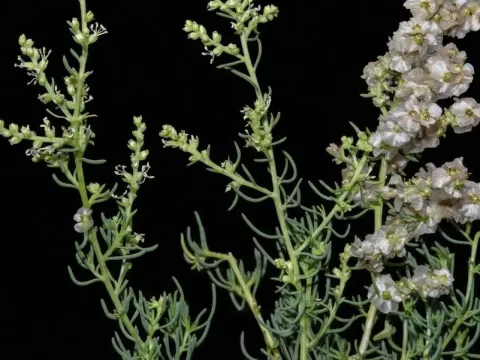
Salsola webbii
Salsola webbii
Sowing Salsola webbii is generally performed in the spring season once the soil temperature is adequate to support seed germination and initial growth.
What the section contains
Salsola webbii
Given the arid regions where this crop is typically cultivated, it is crucial to synchronize sowing with the seasonal rainfall periods to ensure consistent crop emergence.
Seeds are sown at a depth of 1 to 3 centimeters, depending on soil texture, which allows for optimal moisture contact without hindering the emergence of the tender seedlings.
The planting process often involves row or wide-row seeding patterns, which facilitate mechanical weed control and allow individual plants sufficient space for root expansion.
Proper field preparation, including light surface harrowing, significantly enhances germination rates by improving soil aeration and reducing the formation of hard crusts.
Salsola webbii belongs to the Amaranthaceae family and is a specialized halophyte, making it uniquely suited for saline soils where common crops struggle to survive.
This species exhibits remarkable tolerance to extreme drought and high temperatures, positioning it as an ideal candidate for agricultural development in desert and semi-desert environments.
It prefers well-drained, sunny locations and is capable of thriving in nutrient-poor substrates, including sandy or rocky soils characteristic of arid geographic zones.
The plant adapts well to a wide range of soil pH levels, displaying a high level of resilience in alkaline soils with high concentrations of mineral salts.
Botanically, it is a sturdy shrub with a deep-reaching root system, allowing the plant to effectively access moisture from deeper soil layers during prolonged dry periods.
The biomass productivity of Salsola webbii is a vital characteristic, as it maintains green forage availability throughout the growing season even in harsh conditions.
It serves as an essential source of minerals and nutrients for livestock, making it a valuable forage crop for sheep, goats, and other grazing animals in marginal lands.
Yield stability is a primary advantage of this culture; while growth varies with rainfall, the plant remains productive when other traditional crops fail completely.
Integration into pastoral systems allows for the utilization of vast areas previously deemed unsuitable for agriculture, increasing the overall carrying capacity of these landscapes.
With correct management, the crop supports multiple harvests or sustained grazing, contributing to a reliable supply of supplementary livestock feed throughout the year.
Due to its specialized salt-accumulating metabolism, Salsola webbii possesses a robust natural defense mechanism, significantly reducing susceptibility to standard plant diseases.
Pest pressure is generally low, though localized damage from specific insect species or small rodents may occur, usually not reaching levels that require extensive intervention.
Fungal pathogens are rarely problematic, as the dry, saline conditions where the plant thrives are typically unfavorable for the development of most harmful fungal spores.
Management strategies should focus on preventing mechanical damage to the shrub canopy during grazing or harvesting, as open wounds can potentially lead to localized infections.
Weed management during the establishment phase is the most critical agricultural task, ensuring that young seedlings are not outcompeted by more aggressive opportunistic plants.
Harvesting for silage or dried fodder should be timed to peak biomass accumulation before the stems undergo significant lignification, ensuring maximum nutritional quality.
Mechanical harvesting requires machinery adjusted for higher cutting levels to protect the lower woody parts of the plants, facilitating rapid regrowth for future cycles.
Seed collection is performed upon fruit maturity, recognizable by color changes, to ensure high germination potential for subsequent planting seasons.
Post-harvest handling involves rapid drying to achieve low moisture levels, which is essential to prevent decay or mold development during long-term storage.
A well-planned harvesting schedule maximizes total annual yield and ensures that the shrub remains productive over multiple seasons, providing a consistent source of fodder.