
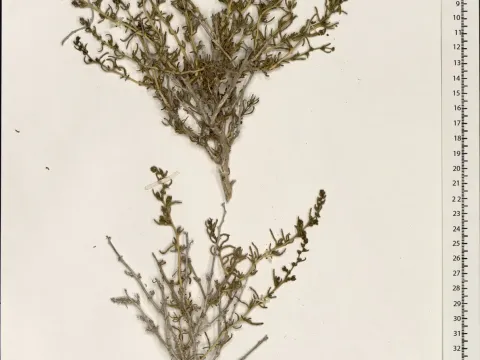
Salsola schweinfurthii
Salsola schweinfurthii
Sowing of this crop is typically performed during the onset of the rainy season, allowing seeds to utilize available moisture for germination.
What the section contains
Salsola schweinfurthii
Sowing depth should be kept to a minimum, as the small seeds of this halophyte struggle to emerge if buried under a thick layer of soil.
Early spring is considered the optimal time for seeding, once the soil temperature stabilizes to support active embryonic cell division.
To ensure uniform emergence, a row-based sowing method is recommended, maintaining a distance of 40–60 cm between rows.
Pre-sowing seed treatment is rare, although soaking in growth stimulants may be used in highly saline soils to improve germination energy.
Salsola schweinfurthii belongs to the Amaranthaceae family and is a characteristic representative of desert halophyte vegetation.
The crop demonstrates exceptional tolerance to high salt concentrations in the soil solution, making it ideal for the reclamation of degraded lands.
The plant prefers well-drained sandy or loamy soils with a distinctively alkaline pH level.
A primary climatic requirement is intense sunlight and a long frost-free period, which are typical for arid and semi-arid regions.
In its natural habitat, the plant is adapted to extremely low rainfall levels and survives through the development of a powerful root system.
The plant biomass actively accumulates nutrients during the growing season, serving as a valuable forage source for small ruminants.
Green mass yield is directly dependent on soil moisture availability during the active growth phase, despite the species' drought tolerance.
With intensive management, it is possible to obtain two harvests per season if adequate irrigation is provided during dry spells.
The forage value of this crop lies in its high mineral content, which significantly benefits animal metabolism.
Seed production is usually not the main priority, but with proper agronomic practices, stable seed yields can be achieved for future cultivation.
Common diseases for this species include fungal root infections caused by waterlogging, which rarely occur under desert conditions.
Among pests, locusts pose the greatest danger, capable of destroying entire plantations during the seedling or early vegetative growth stages.
In some years, specific desert caterpillar species are observed feeding on the succulent shoots of the crop.
High humidity during the flowering phase may lead to outbreaks of powdery mildew, requiring preventive measures.
To protect the crops, it is recommended to implement proper crop rotation and perform regular monitoring of the plant's vegetative parts.
Harvesting is performed during the peak flowering phase, when the nutrient content in the aerial parts reaches its maximum level.
The green mass is harvested using mechanized methods, leaving a stubble height of 5–10 cm to allow for subsequent regrowth of shoots.
After mowing, the mass must be dried promptly to prevent the loss of nutritional quality due to fermentation processes.
Seed collection is carried out after the fruits turn fully brown, indicating they are ready to detach from the parent plant.
Cleaning of the harvested crop is conducted using winnowing machines, as the fruits possess a unique structure with wing-like appendages.