
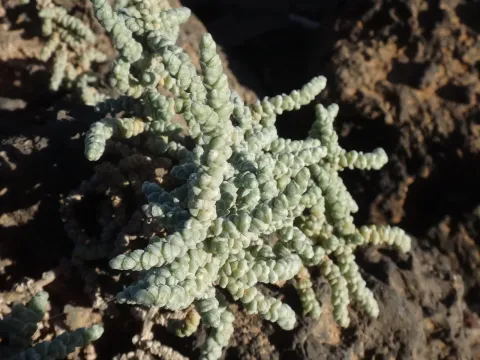
Salsola tetragona
Salsola tetragona
Salsola tetragona belongs to the Amaranthaceae family and is recognized as a specialized halophyte. It is specifically adapted to highly saline environments such as salt marshes and solonchaks, where typical agricultural crops are unable to thrive.
What the section contains
Salsola tetragona
Originating from the arid regions of Central Asia, this species has evolved unique biological mechanisms to survive extreme temperatures and water scarcity. Its botanical structure features distinct four-sided stems and succulent leaves that aid in effective moisture retention.
The plant demonstrates exceptional resilience to environmental stressors, including high alkalinity and low soil fertility. Its growth cycle is synchronized with the dry periods of the year, allowing it to maintain metabolic activity when other species become dormant.
Soil requirements focus on high salinity tolerance and the ability to extract minerals from harsh, alkaline substrates. It plays a significant role in biological soil remediation by reclaiming degraded lands through its deep and efficient root architecture.
Agronomic management requires careful site preparation to reduce competition from weeds during the early vegetative stages. Once the crop is established, it becomes highly competitive and self-sustaining in its natural habitat.
The primary economic value of Salsola tetragona lies in its use as a high-protein forage crop for livestock. It is particularly valued in sheep and camel farming due to its nutritional composition, which remains stable throughout the season.
Its role in rangeland management is critical, as it provides feed in late autumn and winter when other forage sources are depleted. This sustainability makes it a strategic asset for animal husbandry in desert-fringe zones.
Beyond its feed value, the species is widely used for land stabilization projects. Its root system is highly effective in preventing wind erosion and anchoring sandy soils in sensitive ecological zones.
Harvesting techniques involve mechanical mowing of the green mass during the peak biomass production phase. The resulting yield can be utilized directly as pasture or processed into dry feed supplements for livestock.
Future potential includes exploring its bio-active properties for the pharmaceutical industry, given the plant's unique ability to concentrate specific minerals and secondary metabolites from saline soils.
Pest threats primarily include specialized phytophagous insects that target species within the Amaranthaceae family. These insects can cause localized damage to the stems and leaves, impacting overall biomass productivity.
Disease outbreaks are typically triggered by excessive soil moisture or poor drainage, which can lead to root and crown rot. Preventing waterlogged conditions is the most effective strategy for maintaining plant health.
Integrated pest management strategies are recommended, focusing on crop rotation and spatial isolation. By maintaining distance between Salsola stands and other host plants, the risk of pest infestation can be significantly lowered.
Regular monitoring of field conditions is essential, especially following rainfall events. Early detection of fungal signs allows for non-chemical interventions, which is preferred for forage safety.
Given its status as a forage crop, the use of chemical pesticides is strictly regulated. Agronomists should prioritize cultural practices and biological control to ensure the safety and quality of the harvested feed.