
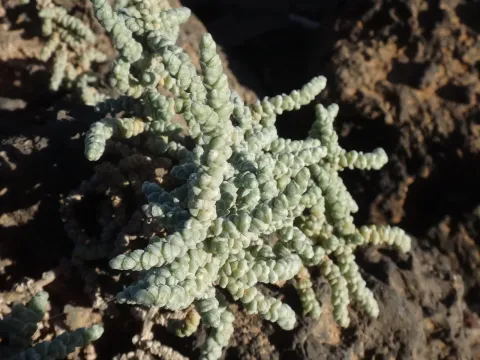
Salsola tetrandra
Salsola tetrandra
Salsola tetrandra is a perennial subshrub belonging to the Amaranthaceae family. It is a highly resilient halophytic species, primarily recognized for its utility in rehabilitating degraded saline lands and providing forage in arid environments.
What the section contains
Salsola tetrandra
Sowing is typically performed during autumn or early spring. Given the small size of the seeds, shallow sowing depth (1-2 cm) is mandatory to ensure proper germination and prevent seed burial too deep for the emerging sprout to reach the surface.
Preparation of the seedbed should aim for a fine tilth to facilitate moisture capillary movement from the subsoil. This is vital in arid regions where rainfall is erratic and surface soil moisture depletes quickly.
Precision planting equipment is recommended to optimize plant spacing. Proper distribution prevents competition between seedlings and ensures that each plant develops a robust root system capable of tapping deep moisture sources.
Post-sowing soil compaction is often beneficial to improve seed-to-soil contact. This practice, combined with optimal sowing dates, significantly increases field emergence rates in challenging climatic conditions.
This species is specifically adapted to saline soil conditions, thriving in environments with high concentrations of chlorides and sulfates. Its physiological ability to manage high salt levels makes it an ideal pioneer plant for salt-affected regions.
Salsola tetrandra exhibits remarkable drought tolerance. It is characterized by deep taproot development, which allows it to thrive in arid climates where other forage crops would suffer from moisture stress.
The plant requires full sun exposure for optimal photosynthesis and vegetative development. It is highly intolerant of shade and performs poorly if competing with taller vegetation or weeds that block direct sunlight.
Soil requirements focus on aeration rather than texture. While the plant can withstand sandy and loamy substrates, it requires well-drained soil. Waterlogging is detrimental and significantly increases the risk of root pathogens.
Temperature range tolerance is broad, as the species is native to harsh desert climates. It demonstrates high stability under extreme heat during the growing season and withstands winter cold without significant damage to the root system.
The economic value of Salsola tetrandra lies in its role as a stable forage source in arid grazing lands. It provides essential minerals and protein when traditional pasture grasses become senescent and lose nutritional value.
Forage yield is primarily dependent on seasonal precipitation patterns. In favorable years, the biomass production is significant, making the species a reliable component of the forage chain in desert and semi-desert livestock systems.
The chemical profile of the aerial parts is dense with minerals, which are crucial for the health of camels, sheep, and goats. Integrating this species into livestock rations improves overall productivity in challenging terrains.
Management techniques such as rotational grazing are recommended to prevent overexploitation of the stands. Sustainable utilization ensures the longevity of the pasture and allows for natural regeneration of the plant population.
Limited fertilizer application, particularly phosphorus, can enhance yield in intensively managed stands. This encourages stronger root structure and higher regrowth capacity after harvesting or intensive grazing.
Orthoptera (grasshoppers and locusts) pose the most significant threat to Salsola tetrandra stands. Periodic outbreaks can lead to substantial biomass loss if not managed effectively within the pastoral ecosystem.
Fungal diseases, such as powdery mildew, may occur during periods of high humidity or in overcrowded stands where air circulation is restricted. Managing plant density is a key preventative measure.
Root rots are the most common pathological threats associated with improper irrigation or soil management. Poor drainage or stagnant water after rainfall creates an ideal environment for pathogen proliferation.
Weed management during the establishment phase is essential. Young seedlings are sensitive to competition, and early control measures can prevent weed encroachment and ensure the survival of the crop stand.
Integrated Pest Management (IPM) strategies, which prioritize biological controls over chemical interventions, are the preferred approach to maintain the safety and sustainability of these forage rangelands.
Hay harvesting should occur during the flowering phase when the plant reaches its peak nutritional quality. Timely cutting is necessary to avoid the development of overly lignified stems that reduce digestibility.
Quick drying of the harvested biomass is essential, particularly in hot and arid conditions. Modern mower-conditioners can expedite the process, ensuring the preservation of nutrients before they degrade under UV exposure.
Seed harvesting requires specialized equipment to capture the seeds during full maturity. Careful monitoring of the maturation stage is required, as the plant can shed seeds rapidly once they become fully dry.
Storage of the forage requires dry and well-ventilated conditions to maintain quality. Proper stacking or baling helps minimize moisture accumulation, preventing the risk of spoilage or mycotoxin development.
Efficient bale compression improves transportation and storage logistics. High-density bales of Salsola tetrandra forage offer a compact and nutrient-dense feed source for livestock throughout the winter months.