
Salsola papillosa
Salsola papillosa
Description
Sowing dates
Sowing Salsola papillosa requires attention to soil temperature and timing. The ideal planting window occurs during early spring when soil moisture levels are relatively stable, allowing seeds to germinate before the onset of the summer heat.
Seeds should be distributed with minimal soil covering to ensure optimal light exposure, which is crucial for the germination of desert-adapted species. Heavy coverage may inhibit sprout emergence and lower overall success rates in the field.
Row planting is standard for this culture to maintain optimal spacing between plants. This approach ensures that individual bushes have adequate access to minerals and space to develop their characteristic woody structure without competing for limited soil resources.
Rolling the soil after sowing is a recommended agronomic practice to improve the physical contact between seeds and the soil surface. This small step significantly increases water absorption and ensures a more uniform emergence of seedlings across the plot.
During the establishment phase, preventing external interference like animal grazing is vital. Protecting the young plants for their first year allows them to focus energy on developing their complex root systems, which are essential for long-term viability.
Growing requirements
Salsola papillosa is a notable member of the Amaranthaceae family, highly specialized for survival in arid and saline environments. As a halophyte, it has evolved mechanisms to store salts in its tissues, allowing it to thrive in conditions where most crop plants fail.
Originating from the desert regions of Central Asia, this species acts as a critical pioneer plant for ecological restoration. Its ability to colonize hypersaline and degraded soils makes it a vital tool for combating desertification and protecting fragile ecosystems.
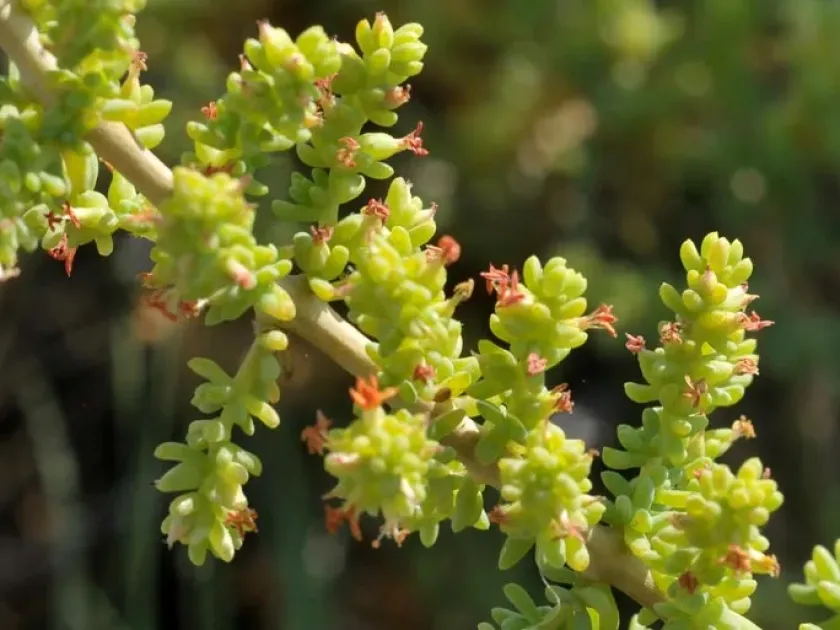
Botanically, it is characterized by a shrubby growth habit and fleshy leaves covered in small papillae, which are essential for water retention. The plant's deep taproot allows it to tap into deep-seated moisture, ensuring survival during severe drought seasons.
The environmental requirements are minimal, focusing primarily on high light intensity and soil with specific saline characteristics. It performs exceptionally well in sandy or loamy soils with high alkalinity, where it contributes to nutrient cycling and soil structure improvement.
In terms of climate adaptation, Salsola papillosa exhibits extreme resilience to high temperatures and winter frosts. Its hardy nature makes it a key candidate for low-maintenance agricultural projects in harsh desert climates.
Yield
While Salsola papillosa is not typically harvested for intensive commercial grain production, its biomass yield is of significant agricultural value. The plant provides essential forage in arid regions, supporting livestock populations in areas where other feeds are unavailable.
Productivity is measured by total dry matter per hectare and the nutritional quality of the forage provided to browsing animals. Under stable conditions, mature stands offer consistent yields that fluctuate only slightly based on annual precipitation patterns.
The grazing capacity of the plant is high, as its high salt content provides vital minerals to livestock. Sustainable grazing practices are essential to ensure the longevity of the plant stands, as over-grazing can lead to the depletion of seed banks in the soil.
In addition to fodder, the plant contributes to the overall stability of the landscape, which is considered a form of "hidden yield" in ecological agriculture. Healthy stands help maintain soil health and prevent wind erosion, which protects adjacent lands.
Harvesting for seed production occurs once the fruit has fully ripened, typically at the end of the dry season. Seeds are collected by mechanical methods or traditional hand-harvesting, ensuring high-quality material for subsequent cultivation cycles.