
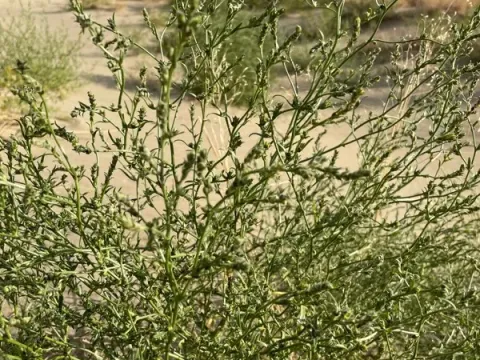
Corispermum villosum
Corispermum villosum
Corispermum villosum is an annual herbaceous plant belonging to the Amaranthaceae family. It is a specialized psammophyte, naturally adapted to colonize shifting sandy environments.
What the section contains
Corispermum villosum
Sowing times are primarily determined by local climate patterns, with early spring being the preferred period for germination in temperate and arid zones.
Due to the small size of the seeds, the sowing depth must be carefully controlled, typically ranging from 1 to 2 centimeters to ensure adequate soil moisture contact.
Standard agronomic practices for this crop involve using precision seeders to maintain optimal spacing, preventing overcrowding which could lead to resource competition.
Once established, the plant shows rapid early-season growth, leveraging spring moisture to develop a deep root system necessary for surviving later summer droughts.
This crop has highly specific soil requirements, thriving best in light, sandy, and nutrient-poor soils where other conventional crops often fail to establish.
It is exceptionally drought-tolerant and adapted to high-temperature environments, making it a viable candidate for the reclamation of degraded sandy lands.
The plant requires full sun exposure and excellent drainage, as it is highly sensitive to waterlogging, which can cause significant root damage and pathogen susceptibility.
While adapted to low-input conditions, supplemental irrigation during the peak growth phase can substantially boost biomass yields in managed agricultural settings.
Given its origin in arid regions, the plant is well-suited to areas with frequent hot, dry winds that would cause severe transpiration stress in most traditional crops.
The primary utility of Corispermum villosum lies in its ability to produce significant vegetative biomass on marginal lands that are unsuitable for intensive farming.
In pastoral regions, the plant can serve as a supplemental forage source, providing essential nutrients for livestock when preferred pasture species are dormant.
The seeds of the plant contain beneficial fatty acids, which has led to ongoing research into its potential as an industrial oilseed crop in specific arid regions.
Yield stability is heavily dependent on favorable environmental conditions during the flowering stage, as seed production is sensitive to extreme heat spikes.
Improving yields requires a balance between population density and resource availability, with successful management often focusing on maximizing biomass per hectare.
The most common disease threat for Corispermum villosum is root rot, typically caused by excess moisture or poor drainage in the early stages of plant development.
Pests, particularly aphids and certain coleopteran insects, may infest young foliage and reproductive structures, potentially causing localized yield reductions.
Strategic crop management, including maintaining clean fields and appropriate crop rotation cycles, is essential for mitigating disease and pest outbreaks.
Early detection through regular field scouting is crucial for implementing effective pest control strategies without resorting to excessive chemical applications.
Integrated Pest Management (IPM) practices, emphasizing biological and cultural controls, are recommended to preserve the plant's health and environmental integrity.
Harvesting for forage should be conducted before the stems become overly lignified to ensure high nutritional quality and palatability for livestock consumption.
For seed harvesting, timing is critical; producers must cut the crop at full physiological maturity to minimize shattering losses during the harvest operation.
Modern harvesting machinery, such as combines, can be utilized effectively if settings are adjusted for the plant's unique morphology and seed characteristics.
Post-harvest processing requires robust cleaning systems to remove debris, specifically sand and fine particulate matter common in the plant's natural habitats.
Properly dried and stored seeds maintain high viability for subsequent seasons, provided they are kept in a cool, moisture-controlled environment.