
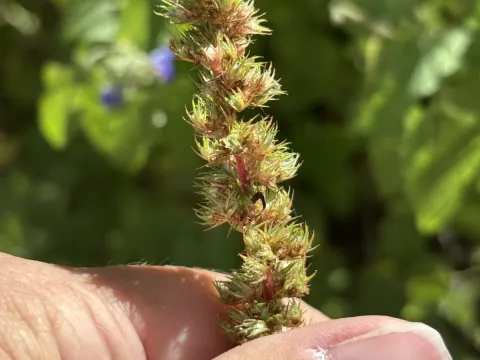
Watson's amaranth
Amaranthus watsonii
Sowing of Amaranthus watsonii requires a well-prepared seedbed due to the extremely small size of the seeds. It is essential to ensure the soil has warmed up sufficiently, ideally reaching temperatures between 15 and 20 degrees Celsius.
What the section contains
Watson's amaranth
Seed placement should be shallow, typically 1 to 2 centimeters deep, to facilitate uniform emergence. Deep planting is a common cause of poor stand establishment in commercial amaranth production.
Row spacing is typically adjusted between 45 and 60 centimeters, allowing for proper aeration and mechanical weed control during the early stages of growth. Higher plant densities are preferred when the crop is intended for biomass production.
Post-sowing soil compaction is recommended to enhance moisture contact with seeds, especially in drier environments. This step significantly improves germination rates and creates a more vigorous initial development phase.
Timing should be aligned with local seasonal weather patterns, avoiding late frost risks that could severely set back young seedlings. Proper field moisture management prior to sowing is the key to success.
Watson's amaranth is highly adapted to arid and semi-arid environments. It belongs to the Amaranthaceae family and displays remarkable resilience to heat, drought, and even soil salinity.
The crop thrives in well-drained, light-textured soils. While it exhibits great tolerance to alkaline soil conditions, it performs optimally in soils with good drainage and adequate nutrient availability.
This species is highly photophilic, meaning it requires intense sunlight to maximize growth and reach full physiological maturity. Shading, even from surrounding weeds, should be minimized.
Water requirements are relatively low compared to traditional cereals. The plant utilizes a robust root system to access deep soil moisture, making it a reliable option for regions with limited rainfall.
Minimum input of mineral fertilizers is often sufficient, as the species is naturally efficient at nutrient uptake. However, moderate nitrogen application can significantly boost overall biomass yield.
Common pests include wireworms and various weevils that can target young plants. Seed treatments are often employed to mitigate early-stage damage and protect the stand density.
Leaf-feeding insects, such as armyworms or loopers, can impact foliage during the peak vegetative stage. Integrated pest management strategies, including the use of pheromone traps, are recommended.
Fungal diseases are generally associated with poor field drainage or extended periods of high humidity. Preventive measures include maintaining plant spacing to encourage airflow and reduce moisture accumulation on leaves.
Weed management is critical during the first month of the crop's life. Since Amaranthus watsonii grows slowly at the start, competition for sunlight and space must be eliminated early on.
Crop rotation serves as the primary defense against soil-borne pathogens. A minimum 3-year break between planting amaranth on the same plot is standard practice for sustainable production.
For forage and silage production, harvesting should take place at the flowering stage. At this point, the plant provides the optimal balance of protein and digestible fiber for livestock consumption.
Grain harvest is performed using modified combines capable of handling small, delicate seeds. Careful calibration of the cylinder speed and sieve sizes is necessary to avoid excessive seed loss and breakage.
Post-harvest handling involves immediate drying of the grains to a moisture content of approximately 12 percent. This is vital to prevent spoilage and mycotoxin development in storage facilities.
When ensiling, the chopped material should be tightly packed to ensure anaerobic conditions. Amaranthus watsonii ferments effectively when properly managed, producing high-quality protein-rich feed.
Timing of the harvest must be precise, as delaying the operation can lead to seed shattering and loss of nutritional quality. Regular inspection of the field helps determine the optimal window for collection.