
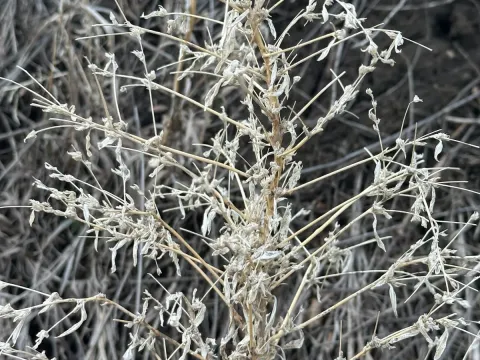
Winterfat
Eurotia
Winterfat (Eurotia lanata) is a member of the Amaranthaceae family, widely recognized for its ability to thrive in challenging environments.
What the section contains
Winterfat
The optimal time for seeding is late autumn or very early spring, allowing the seeds to benefit from natural stratification and seasonal moisture.
Seeds are broadcast onto prepared soil and covered lightly, as the germination rate is significantly reduced if they are buried too deep.
Using high-quality, fresh seeds is critical because the viability of the seed coat decreases rapidly after the first year of storage.
Success in establishing a stand depends heavily on minimizing competition from invasive weeds during the first year of growth.
Winterfat requires well-drained, porous soils and is perfectly adapted to alkaline or saline conditions where many other forage crops fail.
The plant demonstrates exceptional drought tolerance, being specifically adapted to survive in areas with very low annual precipitation levels.
Full solar exposure is necessary for healthy development; the plant performs poorly in shaded areas and requires open rangeland conditions.
It can endure extreme thermal variations, successfully surviving both bitter winter freezes and intense heatwaves typical of desert climates.
Soil aeration is a vital factor; compact or waterlogged soils will lead to root rot and eventual death of the shrub population.
Winterfat is an essential forage species, providing high-quality protein content that remains stable even after the plant matures and dries.
Livestock, particularly sheep and cattle, highly favor this plant during the winter season when other green forage is largely unavailable.
The productivity of rangelands improved with winterfat can significantly increase, providing a reliable safety net for pastoral livestock management.
The density of the stand must be carefully managed to ensure that overgrazing does not destroy the terminal buds necessary for spring regrowth.
This shrub offers an excellent nutritional profile, high in calcium and crude protein, supporting the health of animals in arid regions.
Grasshoppers and other orthopteran insects pose the most significant threat, capable of defoliating stands during outbreaks.
While the plant is generally hardy, excessive moisture may introduce fungal issues, though these are rare in its native arid habitats.
Rabbits and small rodents may consume young seedlings, which can impede the successful establishment of new stands on rangelands.
The primary non-biological threat is inappropriate grazing management, which stresses the plant beyond its capacity to recover.
Effective management strategies include rotational grazing to allow the plants sufficient time to recover their vigor between grazing periods.
Seed harvesting is conducted when the fruit capsules become dry and grayish, typically occurring in late autumn.
Because the seeds are wind-dispersed, timeliness is essential to prevent significant yield losses during the harvest operation.
For forage, mechanical harvesting is typically reserved for seed multiplication plots rather than wild rangeland grazing.
Harvested material should be cleaned and stored in a cool, dry environment to maintain maximum seed viability for the following season.
In extensive pastoral systems, the plant is harvested directly by grazing animals, which is the most efficient and natural method of utilization.