
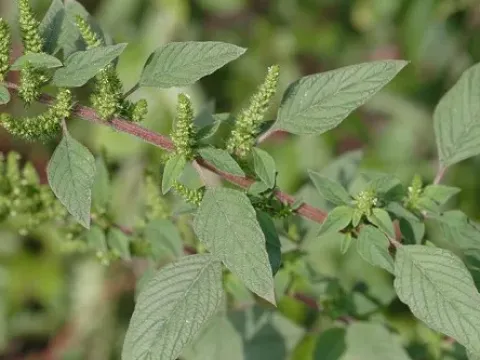
Wright's amaranth
Amaranthus wrightii
Wright's amaranth is a heat-loving crop, so planting should be conducted strictly in well-warmed soil. The optimal period for starting field work begins when the top layer of the ground reaches 12–15 degrees Celsius.
What the section contains
Wright's amaranth
Sowing too early in cold ground leads to delayed germination and susceptibility to fungal diseases in the seedlings. It is essential to wait for stable warm weather that eliminates the risk of even brief spring frosts.
Seeding depth is a critical parameter due to the small size of the seeds. It is recommended to place the seed material at a depth of no more than 1.5–2 centimeters to ensure uniform and successful germination.
The seeding rate depends on the purpose of cultivation, whether for green mass or grain. For fodder purposes, denser planting is preferred, utilizing precision seeders for even distribution across the field.
After finishing sowing, it is advisable to roll the soil. This action improves the contact between the seed and soil moisture, which is extremely important for amaranth during the first two weeks of the growing season.
Wright's amaranth is an annual herbaceous plant of the Amaranthaceae family, known for its exceptional drought tolerance. The species is native to the southwestern regions of North America, which defined its high adaptability to water scarcity.
The crop prefers light, well-drained sandy or sandy-loam soils. It does not tolerate waterlogging or acidic heavy soils, so it is best to choose plots with a neutral pH for industrial cultivation.
The plant has a powerful root system capable of penetrating deep into the soil profile. Thanks to this feature, amaranth efficiently utilizes moisture and nutrients that are unavailable to most other field crops.
Lighting is an important development factor. Wright's amaranth is a short-day plant that is highly light-loving and requires open, unshaded areas to accumulate maximum biomass and achieve full seed maturation.
At the beginning of its life cycle, the crop requires weed control as it grows slowly initially. However, once it reaches a height of 20–30 centimeters, the plant begins to grow rapidly, suppressing weeds in the inter-rows independently.
Green mass yield depends directly on soil fertility and the level of agronomic management. Under favorable conditions, the crop forms a significant volume of above-ground mass suitable for high-protein livestock feed.
The biochemical composition of the plant makes it a valuable source of protein and minerals. A high content of lysine and other essential amino acids allows it to be included in livestock rations as a nutritious supplement.
Seed productivity in Wright's amaranth is characterized by a long maturation period. Grain harvesting requires careful control of moisture levels to avoid losses due to shattering of the flower panicles during the process.
To increase yields, the application of moderate doses of nitrogen fertilizers during the early growth phases is recommended. However, excessive nitrogen application can cause lodging, which makes mechanical harvesting difficult.
Cultivation experience shows that by maintaining correct planting density and nutritional balance, Wright's amaranth is capable of producing stable yields even during hot and dry summers when other crops lose productivity.
The main pests of amaranth include weevils and various types of caterpillars that damage leaves and panicles. Regular monitoring of the crops allows for the timely detection of infestation sites to apply biological or chemical insecticides.
Root diseases, such as root rot, occur during excessive soil moisture and compaction. Improving aeration and adhering to crop rotation are the best preventive measures for these issues.
Powdery mildew can affect plants in conditions of high humidity and dense planting. Symptoms appear as a white coating on the leaves, which significantly reduces the crop's photosynthetic capacity.
Pests like aphids may settle on young shoots, sucking the sap and inhibiting the plant's development. Controlling ants, which often spread aphids, is an effective indirect method of protecting the crops.
Weeds pose a serious threat only during the initial stage of growth. The use of high-quality seed and timely inter-row cultivation minimizes the risk of crop suppression by weeds.
Harvesting for green mass is carried out during the flowering phase, when nutrient content in the leaves reaches its maximum. This allows for the production of high-quality silage or hay for livestock production.
Harvesting for grain requires the crop to reach full physiological maturity. The panicles take on a characteristic color, and the seeds become hard and easily detach from the flower base upon mechanical impact.
For mechanical grain harvesting, combines with specific settings for the threshing apparatus are used. Due to the small seed size, special sealing of machine parts is required to prevent grain loss.
Post-harvest processing includes mandatory drying of the grain to a moisture level of 12–14 percent to prevent spoilage and self-heating. Moist seeds are highly prone to mold due to their high concentration of organic matter.
Proper storage of the harvest in dry, ventilated facilities ensures the preservation of the amaranth's nutritional properties for an extended period, which is essential for subsequent use in feed production.