
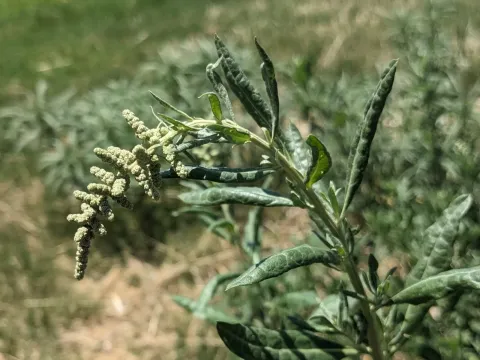
Wright's saltbush
Atriplex wrightii
Wright's saltbush belongs to the Amaranthaceae family and is recognized for its significant role as a drought-tolerant crop suitable for saline or degraded soils. The sowing period typically begins when soil temperatures consistently reach 10–12 degrees Celsius, usually in mid-spring, allowing the seeds to germinate efficiently without the risk of frost damage.
What the section contains
Wright's saltbush
Seed depth should be kept shallow, generally between 1 and 2 centimeters, to facilitate rapid emergence while ensuring the seedlings remain anchored in the soil moisture layer. Proper soil preparation before sowing, such as creating a fine tilth, significantly improves germination rates and helps establish a uniform stand across the field.
This species is a known halophyte, which means it thrives in environments that are typically hostile to traditional crops due to high salt concentrations. It possesses a deep and extensive root system, allowing the plant to remain productive even during severe seasonal droughts, making it a valuable candidate for reclamation projects.
The crop requires full sun exposure for optimal photosynthetic activity and biomass accumulation throughout the growing season. While it is not demanding regarding soil fertility, it performs best in well-drained, porous soils where its ability to uptake nutrients and water is not inhibited by waterlogging or soil compaction issues.
Common pests affecting this crop include various aphid species and leaf miners that target the foliage, potentially reducing the overall yield of the green biomass. Integrated pest management strategies, including regular field scouting and the use of selective biological or chemical controls, are essential for maintaining the health of the plantation.
Disease pressure, including powdery mildew and other fungal pathogens, often increases during periods of high humidity combined with poor field ventilation. To manage these risks, it is recommended to maintain proper plant spacing and ensure good agricultural practices, which help improve air circulation and prevent the development of a microclimate favorable to pathogens.