
Actinidia
Actinidia
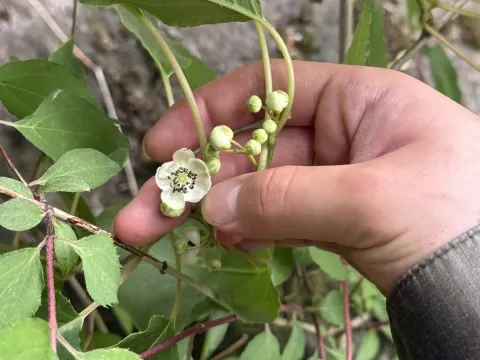
Actinidia is a genus of woody, deciduous vines in the Actinidiaceae family. The most commercially significant species include Actinidia deliciosa (kiwifruit), Actinidia arguta (hardy kiwi), and Actinidia kolomikta.
What the section contains
 Actinidia callosa
Actinidia fulvicoma
Actinidia fulvicoma
Actinidia henryi
Actinidia henryi
Actinidia callosa
Actinidia callosa
Actinidia fulvicoma
Actinidia fulvicoma
Actinidia henryi
Actinidia henryi
 Actinidia holotricha
Actinidia holotricha
Actinidia holotricha
 Actinidia hybrids
Actinidia hybrids
Actinidia hybrids
 Actinidia macrosperma
Actinidia macrosperma
Actinidia macrosperma
 Actinidia melanandra
Actinidia melanandra
Actinidia melanandra
 Actinidia pilosula
Actinidia pilosula
Actinidia pilosula
 Actinidia rubricaulis
Actinidia rubus
Actinidia rubus
Actinidia rubricaulis
Actinidia rubricaulis
Actinidia rubus
Actinidia rubus
 Actinidia rudis
Actinidia rudis
Actinidia rudis
 Actinidia strigosa
Actinidia strigosa
Actinidia strigosa
 Actinidia tetramera
Actinidia tetramera
Actinidia tetramera
 Actinidia trichogyna
Actinidia venosa
Actinidia venosa
Actinidia trichogyna
Actinidia trichogyna
Actinidia venosa
Actinidia venosa
 Broad-leaved actinidia
Actinidia latifolia
Broad-leaved actinidia
Actinidia latifolia
 Golden-flowered actinidia
Actinidia chrysantha
Leather-leaf actinidia
Actinidia coriacea
Golden-flowered actinidia
Actinidia chrysantha
Leather-leaf actinidia
Actinidia coriacea
Actinidia
Planting is best performed in early spring after the danger of frost has passed or in early autumn. As vigorous climbers, these vines require robust support structures, such as trellises or pergolas, to facilitate proper growth and sunlight exposure.
Vegetative propagation via stem cuttings is the standard industry practice to ensure the consistency of fruit quality and variety traits. While seed propagation is possible, it is typically reserved for research and plant breeding efforts.
Most Actinidia species are dioecious, meaning male and female flowers are borne on separate plants. To ensure successful pollination and fruit set, growers must plant both sexes, usually maintaining a ratio of one male vine to every five female vines.
The first few years of a vine's life should be dedicated to establishing a strong structural framework. Pruning is essential to guide the plant's growth, prevent overcrowding, and maintain the balance between vegetative development and fruit production.
Actinidia thrives in moist, well-draining soil that is rich in organic matter. Sandy loams or silt loams with a neutral to slightly acidic pH are ideal, while heavy clay soils that retain excessive water should be avoided to prevent root rot.
The plants are sensitive to wind, which can damage tender new growth; therefore, planting them in sheltered, partially sunny to fully sunny locations is crucial. In regions with intense sunlight, providing partial shade for young vines can be beneficial.
Regular irrigation is vital during the growing season, especially during fruit development. The root system is relatively shallow, making the plants susceptible to drought stress if the soil is not consistently moist.
Climate tolerance varies by species. Actinidia arguta and Actinidia kolomikta are hardy and can withstand cold winters, whereas Actinidia deliciosa requires a longer, warmer growing season and protection from harsh frost.
Nutrient management involves balanced fertilization applied in split doses. Actinidia is sensitive to chloride-based fertilizers, so it is recommended to use specialized horticultural fertilizers that avoid high salt indexes.
Productive maturity typically begins 3 to 4 years after planting when using vegetatively propagated vines. Full commercial yields are generally achieved once the vines reach 7 to 8 years of age.
Yield capacity depends on the cultivar, vine density, and management practices. A mature, well-cared-for vine can produce 10 to 50 kilograms of fruit per season, depending on the specific species and local growing conditions.
The fruits are highly valued for their high vitamin C content, antioxidants, and unique flavor profile. Beyond fresh consumption, they are processed into jams, juices, wines, and dried snacks, adding value to the harvest.
Annual winter pruning is mandatory to manage vigor and improve fruit quality. Removing old wood and thinning out dense branches ensures that the remaining fruiting spurs receive adequate sunlight for optimal maturation.
The overall longevity of the vine is remarkable, with well-maintained plantings capable of remaining productive for 30 to 50 years, making Actinidia a long-term investment for commercial fruit growers.
Young Actinidia plants are famously attractive to cats, which can cause significant damage by scratching and chewing on tender shoots. Installing wire mesh or protective guards is essential during the establishment phase.
Pests like leaf beetles and certain caterpillars may occasionally target the foliage. However, integrated pest management (IPM) practices, such as maintaining healthy vine vigor and monitoring, usually keep these threats below economic thresholds.
Fungal diseases, including leaf spot or botrytis, can occur in environments with poor air circulation or excessive humidity. Proper spacing between vines and timely summer pruning help to improve airflow and reduce infection risks.
Fruit rot pathogens can affect the crop, particularly during periods of heavy rain near the harvest time. Removing fallen fruit and keeping the area under the trellis clean helps minimize the buildup of fungal inoculum.
Chemical control should be a last resort. Growers should prioritize cultural practices and use selective, low-impact fungicides only when necessary, strictly adhering to pre-harvest intervals to ensure safety.
Harvest timing is critical and occurs when the fruits reach the desired maturity levels, usually indicated by changes in skin color and a slight softening of the pulp. Harvesting is typically done by hand to prevent bruising.
Fruits of most Actinidia species are climacteric, meaning they can continue to ripen after being harvested. This allows growers to pick the fruit slightly firm to facilitate handling and transport without loss of quality.
For optimal storage, harvested fruit should be kept in cold, ventilated conditions at temperatures near 0°C to 2°C. Controlled atmosphere storage can significantly extend the shelf life of the fruit for several months.
Sorting during harvest is essential for marketing. Fruits should be categorized by size and condition, and damaged berries must be discarded immediately to prevent the spread of decay to healthy fruit in the packing containers.
Handling requires care because the skin of the fruit can be delicate. Using cushioned crates or specialized picking containers helps maintain the physical integrity of the harvest, ensuring the product meets high retail standards.