
Rawsonia
Rawsonia
Rawsonia is a genus of evergreen trees belonging to the Salicaceae family, native primarily to the tropical forests of Africa. These plants are valued for their lush, glossy foliage and robust structural presence, making them suitable for specialized tropical landscapes.
What the section contains

Rawsonia
The cultivation of Rawsonia requires a stable, warm climate with no exposure to frost or prolonged cold snaps. It thrives best in regions where temperatures remain consistent throughout the year, as it does not possess natural mechanisms to withstand sub-zero conditions.
Soil requirements focus on high organic content and excellent drainage capacity. The plant is particularly sensitive to waterlogging; therefore, adding coarse materials like perlite or sand to the planting site is recommended to maintain optimal aeration for the root system.
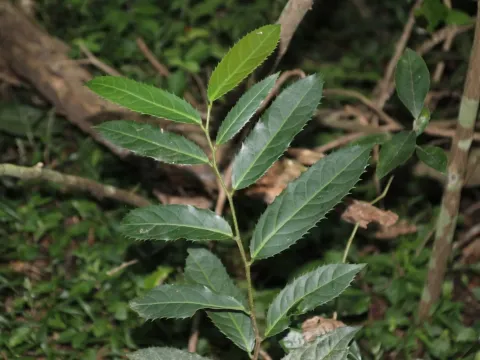
Botanically, Rawsonia is distinguished by its serrated, leathery leaves and characteristic inflorescences. It grows as a medium-sized tree, often forming a dense canopy that provides significant shade and contributes to the microclimate of its immediate surroundings.
Management of the culture involves careful monitoring of moisture levels, as the plant prefers consistently moist but not saturated soil. Supplemental feeding with balanced liquid fertilizers during the active growing season promotes vigorous foliage development and keeps the plant resilient.
Common pathological issues in Rawsonia include fungal leaf spots, which typically appear under conditions of high humidity combined with poor airflow. Improving the spacing between plants is a vital cultural practice to mitigate the spread of spores.
Pest management should focus on common tropical greenhouse pests such as scale insects and spider mites. Regular washing of the leaves and, if necessary, the application of horticultural soap can help maintain the plant's aesthetic and biological health.