
Lindackeria
Lindackeria
Lindackeria is a genus of evergreen trees and shrubs belonging to the Achariaceae family. These plants are native to the tropical forests of Central and South America, as well as parts of Africa, where they thrive in warm and humid conditions.
What the section contains

Lindackeria
The culture requires a stable tropical climate characterized by high humidity and consistent temperatures. It is well-adapted to the understory of dense forests, where it prefers dappled light rather than direct, intense sunshine.
Regarding soil requirements, Lindackeria needs well-drained, nutrient-rich substrates. The plants are highly susceptible to waterlogging, which necessitates careful site selection for any cultivation attempts.
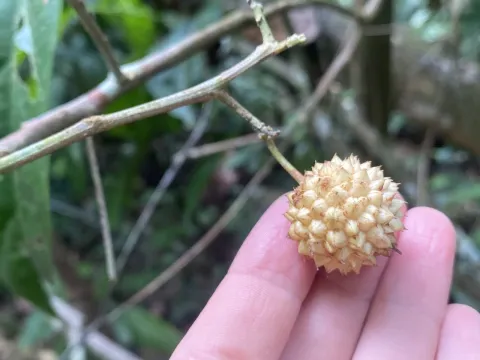
Botanically, the genus is recognized by its simple, alternate leaves with varying margins and small, grouped flowers. The fruits are capsules, often armed with bristles or spines, which represent a significant morphological adaptation.
Effective growth and development are supported by consistent atmospheric moisture. In an agricultural context, mimicking the natural microclimate is essential for the successful introduction of the species into new areas.
The хозяйственное (economic) utility of Lindackeria is currently limited, as it is not a commercially mass-produced crop. However, its seeds are known for containing specialized fatty acids, which attract scientific interest.
Potential applications for the oil derived from Lindackeria seeds include cosmetics and specialized industrial lubricants, though extraction techniques remain largely at a traditional or experimental stage.
Yield metrics for the species are not systematically documented because the harvesting of fruits occurs primarily in wild populations rather than in controlled plantation settings.
Increasing the yield per hectare would require long-term selection programs and domestication of wild specimens to improve seed size and oil content profiles.
Future agricultural prospects rely on analyzing the crop's physiological response to controlled nutrient supply and irrigation, which would define the baseline for sustainable commercial production.
Like many tropical forest species, Lindackeria is vulnerable to fungal pathogens that proliferate in high-humidity environments. Leaf spot diseases and root rots are among the primary concerns for plantation managers.
Pest pressure from tropical insects, particularly larvae that feed on fruit capsules, can lead to significant production losses if left unmonitored during the ripening phase.
Habitat loss and fragmented ecosystems pose an existential threat to wild Lindackeria populations, limiting the gene pool available for potential breeding and agricultural improvement.
To mitigate health risks, maintain proper spacing to ensure airflow, which significantly reduces the incidence of mold and bacterial infections in the leaf canopy.
Integrated pest management strategies for the genus should prioritize biological control agents to keep insect populations in check without damaging the surrounding forest biodiversity.