
Pangium
Pangium
Pangium (Pangium edule) is a prominent tree species belonging to the Salicaceae family. Native to the mangrove swamps and rainforests of Southeast Asia, this tall, evergreen tree thrives in warm, humid tropical environments where it can reach heights of up to 40 meters.
What the section contains

Pangium
The cultivation requirements for Pangium are strict, necessitating high temperatures throughout the year and significant annual precipitation. The plant is highly sensitive to frost, which limits its commercial range primarily to equatorial zones near sea level or in sheltered valleys.
Regarding soil conditions, this crop prefers deep, fertile, and well-drained soils. While it flourishes in moist environments, it is essential that the soil structure prevents waterlogging to avoid root rot, which is a major physiological threat to the development of the tree.
Agricultural management of Pangium involves initial nursery care, where saplings are shaded to mimic the natural canopy structure. As the tree matures, it requires minimal intervention, though maintaining the surrounding ecosystem health remains vital for optimal productivity.
The botanical uniqueness of Pangium lies in its chemical defense system, specifically the presence of cyanogenic glycosides in all parts of the plant. This natural mechanism effectively deters most herbivorous pests, significantly reducing the need for chemical pesticides.
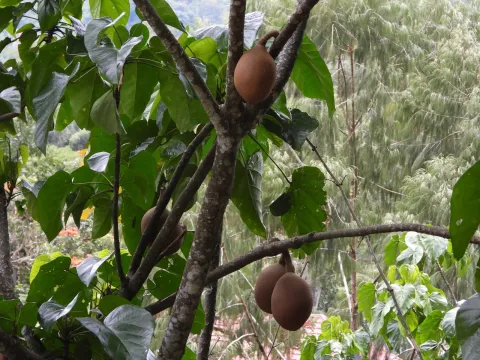
The harvest of Pangium centers on the mature fruits, which house the seeds known as 'pangi' or 'kluwek'. Harvesting is typically conducted manually once the fruits have fully developed and fallen to the forest floor or are easily detached from the branches.
Processing is the most critical stage after harvest due to the inherent toxicity of the seeds. They must undergo a rigorous detoxification process, such as boiling or burying them in a mixture of ash and soil for several weeks to break down the cyanogenic compounds.
Once properly treated, the seeds are transformed into a culinary staple with a rich, nutty flavor, commonly used as a thickening agent or spice in traditional stews. Their durability after processing allows for shelf-stable storage and trade in local markets.
Beyond culinary uses, the tree provides timber that is utilized in small-scale construction and carpentry. The plant's ability to grow in diverse soil types makes it a valuable asset for agroforestry projects aiming to restore tropical forest fringes.
In conclusion, Pangium is a versatile tree that requires specialized knowledge for safe agricultural exploitation. When treated with the appropriate traditional techniques, it represents an important source of nutrition and economic value for indigenous farming communities.