
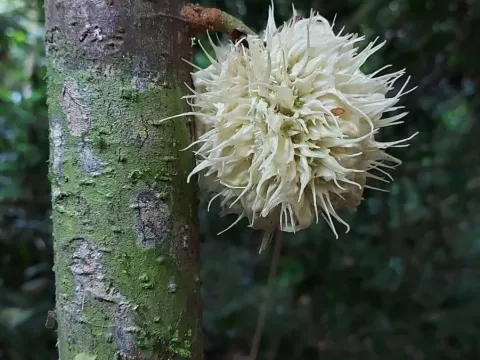
Carpotroche
Carpotroche
Carpotroche is a genus of evergreen trees and shrubs belonging to the Salicaceae family, native to the tropical regions of Central and South America. These plants thrive in environments characterized by high humidity, constant warmth, and deep, nutrient-rich, well-drained soils typical of tropical forests.
What the section contains

Carpotroche
Climatic requirements for Carpotroche are strict, as the plant cannot tolerate frost or prolonged drought periods. A successful cultivation site requires a stable tropical climate where rainfall is distributed throughout the year, supporting continuous growth and the development of leather-like foliage.
Botanically, these trees are distinguished by their cauliflory, where flowers bloom directly from the trunk or woody branches. This adaptation facilitates pollination in the dense forest understory, which is a hallmark of many species within this diverse botanical genus.
The primary economic value of Carpotroche lies in its seeds, which are rich in oils containing unique fatty acids. These compounds have been utilized for their medicinal properties, particularly in treating skin conditions, marking the genus as a subject of interest for pharmacological research.
Agrotechnical practices involve protecting juvenile plants from direct, intense sunlight until they are established. On large-scale plantations, the focus is on maintaining soil fertility and moisture levels to ensure the production of fruit capsules containing viable seeds.
The main phytosanitary challenges for Carpotroche include fungal pathogens that thrive in the high-humidity environment of tropical forests. Leaf spot diseases are common and can significantly weaken the plant if left unmanaged, reducing its overall metabolic capacity.
Insect pests, including various coleopterans and lepidopteran larvae, pose a recurring threat to the foliage and buds. Regular field inspections are necessary to identify early infestation stages and prevent large-scale defoliation of the trees.
Root rot represents a critical physiological threat, often caused by poor soil drainage. When the soil becomes waterlogged, the oxygen availability for roots drops, leading to rapid decline and potential tree mortality across the plantation.
Integrated pest management strategies are essential to maintain the health of Carpotroche stands without disrupting the local ecosystem. The use of natural enemies and biocontrol agents is preferred to maintain a balanced micro-environment around the trees.
Preventative maintenance involves careful spacing of trees to ensure optimal airflow and light penetration. By minimizing physical contact between canopies, farmers can effectively reduce the transmission of spores and pests within the grove.