
Rawsonia lucida
Rawsonia lucida
Description
Growing requirements
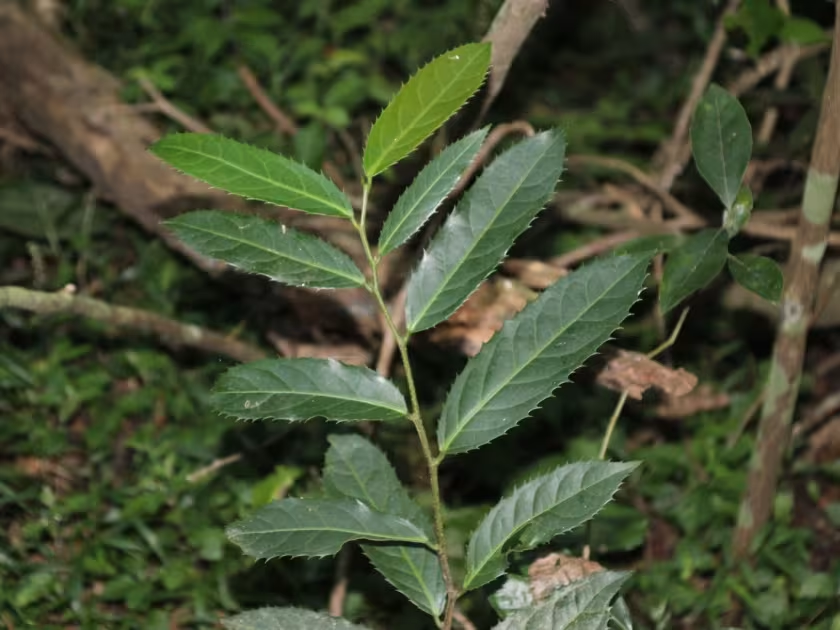
Rawsonia lucida is an evergreen tree or large shrub that belongs to the Salicaceae family. It is recognized for its glossy, dark green foliage and dense canopy, making it a distinctive representative of African tropical flora.
The native habitat of this species is spread across tropical Africa, ranging from Ethiopia to South Africa. It typically thrives in high-altitude forests and coastal regions that provide a moist and stable tropical environment.
The plant requires fertile, well-draining soil with a high concentration of organic matter to support healthy root development. It is particularly sensitive to soil compaction, which can severely hinder its growth and nutrient uptake.
In terms of climate, Rawsonia lucida requires temperatures between 20°C and 28°C and moderate to high humidity. It is highly intolerant of frost, meaning it must be protected or grown in controlled environments in temperate zones.
Agrotechnical practices focus on consistent irrigation and protection from direct, scorching sunlight. Young plants require partial shade to establish, while mature trees can tolerate more light but still prefer protection from harsh midday sun.
Harvesting
The primary economic use of Rawsonia lucida is in ornamental horticulture and landscape design. It serves as an excellent specimen plant or a dense hedge in parks and private gardens located in warm climates.
The wood of the tree is characterized by high density and durability. Historically, it has been utilized for small-scale carpentry and tool handles by local communities, though it is not typically harvested on a commercial scale.
The fruit of the plant is a fleshy berry that provides essential sustenance for local bird populations. In the context of reforestation, this tree is valued for its ability to attract wildlife and support local ecosystem balance.
Seed harvesting is conducted primarily for nursery propagation. The seeds lose viability quickly, so they should be planted shortly after being extracted from the mature fruit to ensure high germination rates.
While disease and pest profiles are not extensively documented for commercial farming, the tree is generally hardy. Standard monitoring for scale insects and fungal leaf spots in humid conditions is recommended for optimal plant health.