
Pangium edule
Pangium edule Reinw.
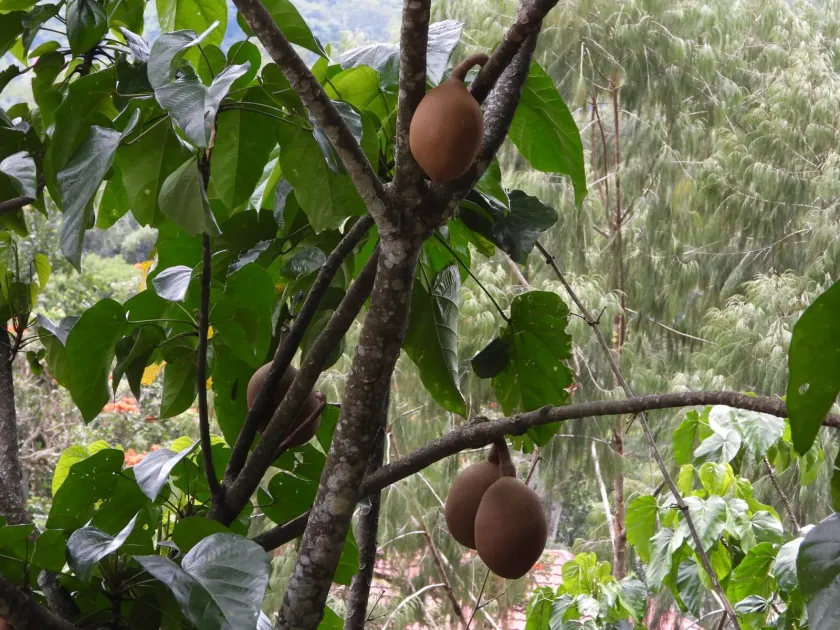
Description
Sowing dates
Propagation of Pangium edule is primarily achieved through seeds, which should be planted immediately after extraction from the fruit due to their short lifespan.
Seeds are placed in a rich, well-draining potting mix within nursery conditions, maintaining high humidity to encourage successful germination.
Optimal germination occurs at temperatures between 25 and 30 degrees Celsius, mimicking the natural warm environment of its native rainforest habitat.
Seedlings require regular hydration and partial shade during their early development stages to avoid stress from direct sunlight exposure.
Transplanting to the final location is typically scheduled at the beginning of the rainy season to ensure the plant establishes a strong root system before the dry period.
Growing requirements
Pangium edule is a large evergreen tree belonging to the Salicaceae family, capable of reaching heights of up to 40 meters in ideal conditions.
This species thrives in humid tropical rainforests and coastal areas, often found in marshy terrain that provides a constant supply of moisture.
The crop requires deep, fertile, and well-drained loam soils to support its substantial biomass and prevent waterlogging of the sensitive root structure.
High relative humidity and stable temperatures are essential for healthy growth, making the tree unsuitable for cultivation in temperate climates.
Protection from high-velocity winds is recommended for plantation sites, as the tree’s expansive canopy can be damaged by tropical storms.
Yield
The tree produces large, brown, leathery fruits weighing up to 2 kilograms, containing numerous seeds encased in a white, fibrous pulp.
Productivity increases significantly as the tree matures, with the first harvest typically occurring 5 to 7 years after the initial planting.
Because the raw seeds contain cyanogenic glycosides, rigorous detoxification methods such as boiling, fermenting, or leaching are required to make them edible.
The economic value of the crop is driven by the use of its seeds in traditional cooking, often serving as a spice or thickening agent in various indigenous dishes.
Mature trees between 15 and 30 years old provide the highest yields, making them a valuable long-term asset in tropical agricultural systems.
Main diseases and pests
Fungal pathogens pose the most significant threat to Pangium edule, especially when poor air circulation or excessive soil moisture occurs.
Defoliating insects can significantly impact the health of young saplings, requiring active monitoring to maintain growth rates during the vegetative season.
Fruit borers may cause damage to the developing harvest, necessitating preventative measures during the early stages of fruit maturation.
Managing diseases involves regular pruning of overcrowded branches to improve airflow, which limits the spread of airborne fungal spores.
Integrated pest management strategies are preferred to ensure the final product remains free from chemical residues and safe for human consumption.
Harvesting
Harvesting is performed manually as the fruit reaches maturity, identified by its size and the slight darkening of the outer rind.
After collection, the fruits are stored to allow the pulp to soften, which makes the extraction of the valuable seeds much more efficient.
The post-harvest detoxification process is a critical step, requiring precision in timing to ensure the removal of all harmful toxins before further processing.
Once detoxified, seeds are washed and dried, allowing them to be stored for extended periods without significant loss of nutritional or flavor qualities.
Careful handling during the harvest process is essential to maintain the structural integrity of the seeds and maximize the overall yield per tree.