
Lindackeria bukobensis
Lindackeria bukobensis
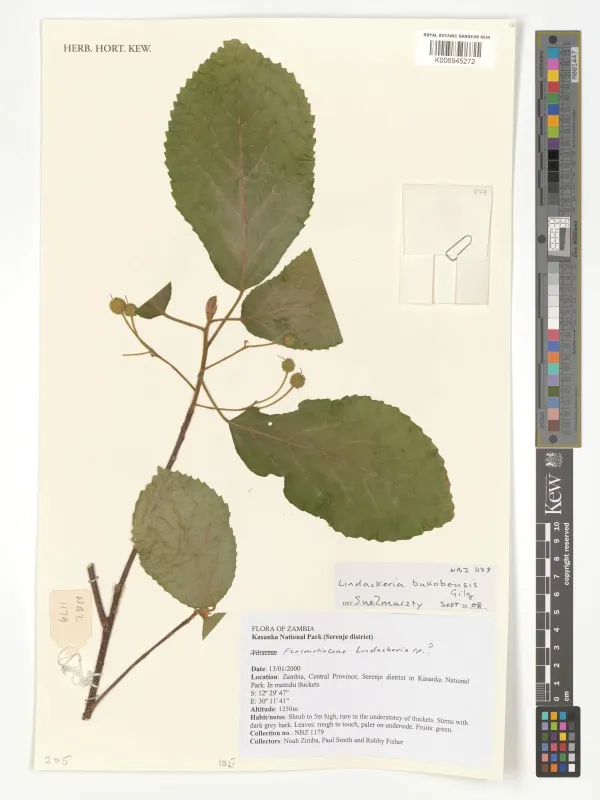
Description
Growing requirements
Lindackeria bukobensis is an evergreen woody species belonging to the Achariaceae family. In its natural habitat, the plant typically grows as a shrub or a small tree within tropical forest ecosystems, preferring areas with high biodiversity.
The plant requires a strictly tropical climate with consistent temperatures throughout the year. It lacks cold tolerance and must be grown in regions free from frost, as sudden drops in temperature can cause severe physiological stress to the plant.
Soils must be deep, fertile, and exhibit excellent drainage to prevent root waterlogging. The species thrives in soils rich in organic matter, which mimic the nutrient-dense forest floor conditions found in its natural geographic range.
Regarding light conditions, Lindackeria bukobensis is adapted to the forest understory, meaning it prefers dappled or filtered sunlight. Direct exposure to intense mid-day tropical sun can lead to leaf scorching, especially in young specimens.
Agrotechnical maintenance focuses on moisture management. The plant requires regular water access during the growing season. Mulching the base of the plant is highly recommended to retain soil moisture and stabilize the root zone temperature.
Yield
The agricultural potential of this plant is centered on the utilization of its seeds, which are investigated for their chemical properties and oil content. Yield efficiency is highly dependent on the plant’s maturity and the management of its canopy structure.
Fruit production occurs after the tree reaches a vegetative equilibrium. The process of nutrient accumulation in the seeds is slow, requiring stable environmental conditions throughout the fruiting phase to ensure high quality and volume.
Proper pruning and canopy management are vital to increase the number of reproductive buds. By optimizing light distribution within the canopy, farmers can improve the consistency of fruit development across the tree's architecture.
Yields are currently maintained at sustainable levels in local production systems. Further improvements in agricultural practices are expected to enhance output as more data on the species' response to controlled fertilization becomes available.
Harvesting efficiency is paramount. Hand-picking the fruits at the correct stage of physiological maturity is essential to maximize the yield of viable seeds and maintain the product's market value.
Main diseases and pests
Fungal infections represent the most significant threat to Lindackeria bukobensis, especially in humid environments where airflow is restricted. Pathogens targeting leaves and fruits can rapidly reduce the overall yield if left unmanaged.
Insect pests, including various leaf-eating beetles and sap-sucking insects, are common in tropical agroecosystems. They can stunt plant growth and weaken the tree, making it susceptible to secondary opportunistic infections.
Root system issues, such as nematodes or crown rot, often arise from poor soil management or excessive moisture. Preventing these threats involves maintaining rigorous field hygiene and selecting sites with superior drainage capabilities.
Integrated Pest Management (IPM) strategies are recommended for managing the health of the plantation. These strategies prioritize the use of biological controls over harsh chemical interventions to maintain the ecological balance.
Monitoring for signs of stress, such as leaf discoloration or premature fruit drop, is essential for every cultivator. Early detection allows for immediate interventions, protecting the plant from sustained damage and potential loss.