
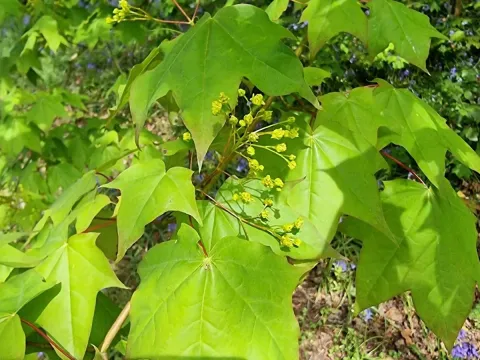
Cappadocian maple
Acer cappadocicum
The Cappadocian maple (Acer cappadocicum) belongs to the Sapindaceae family. It is a deciduous tree widely recognized for its symmetric, spreading crown and deeply lobed leaves that turn brilliant yellow in autumn.
What the section contains
Cappadocian maple
Native to the Caucasus and parts of Western Asia, this species has been successfully introduced into various temperate climates across Europe and North America for ornamental purposes.
Regarding soil requirements, the tree performs best in deep, well-drained, fertile soils with a slightly acidic to neutral pH level. It does not tolerate prolonged waterlogging, which can cause root rot.
Climatic conditions should be moderate; while it is relatively hardy, it appreciates protection from harsh, drying winds in exposed locations during its initial establishment years.
Cultivation involves standard maintenance practices, including mulching the root zone to retain moisture and preventing weed competition during the early stages of the tree's development.
The primary pests affecting Acer cappadocicum include aphids and scale insects, which extract sap from foliage and can lead to the development of sooty mold on the leaves.
Powdery mildew is a frequent fungal problem in this species, especially in areas with poor airflow and high humidity during the mid-summer months.
Root rot caused by Phytophthora species can be a significant threat if the soil structure remains constantly saturated and lacks proper drainage systems.
Management strategies involve rigorous sanitation, such as removing fallen leaves at the end of the season to reduce the inoculum load for the following year.
Integrated pest management, utilizing both biological controls and specific chemical interventions, is recommended for nursery-grown saplings to ensure healthy growth before transplanting.