
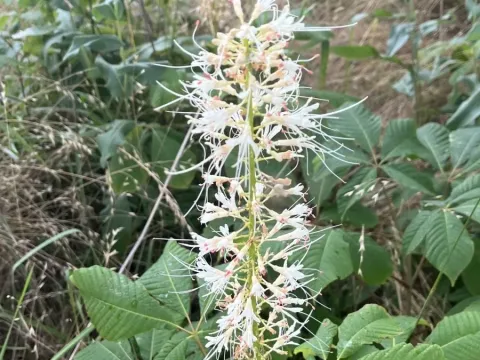
Bottlebrush buckeye
Aesculus parviflora
Bottlebrush buckeye (Aesculus parviflora) is a unique deciduous shrub belonging to the Sapindaceae family. Unlike its taller relatives, it features a broad, suckering habit that makes it an excellent choice for woodland gardens and mass plantings.
What the section contains
Bottlebrush buckeye
Native to the southeastern United States, this shrub thrives in the dappled shade of hardwood forests. It has gained popularity worldwide for its striking white, bottlebrush-like flowers that bloom in mid-summer, providing a visual focal point.
Successful cultivation requires deep, moist, well-draining, and nutrient-rich soil. It is highly adaptable to various pH levels, but it performs best in soils enriched with organic matter, which mimic its natural forest habitat.
The plant prefers partial shade, particularly protecting it from the intense afternoon sun which can scorch its leaves. While it is quite hardy, providing shelter from strong winds can prevent branch damage and dehydration during dry periods.
Maintenance involves providing consistent irrigation during dry spells, as this plant is not drought-tolerant. Applying a layer of organic mulch around the root zone helps regulate soil moisture and temperature, supporting vigorous growth.
The shrub is generally considered disease-resistant but can occasionally suffer from leaf blotch during exceptionally wet seasons. Proper spacing to ensure adequate air circulation is the most effective preventative measure against fungal development.
Pests are rarely a major issue, though minor infestations of mites or scale insects may occur. Integrated pest management, focusing on early detection and the use of horticultural oils or soaps, is usually sufficient to handle these challenges.