


Reference · Crops
Mulberry
Morus L.
Planting mulberry is best done in early spring before sap flow begins or in late autumn before the ground freezes. Timing is crucial for root establishment, as the tree requires a period of dormancy to adapt to its new environment after transplantation.
5
items
What the section contains
Marketplace
Products in this section · 10


Mulberry
To propagate from seeds, stratification at 3–5°C for 1–2 months is necessary to break dormancy. Seeds should be sown in well-prepared, loose soil once the risk of spring frost has completely passed to ensure successful germination.
Container-grown saplings can be planted throughout the growing season, provided that irrigation is consistent. It is vital to handle the roots carefully, as mulberry trees are notoriously sensitive to root disturbance when moved as mature specimens.
Proper spacing is essential; trees should be planted at least 5–6 meters apart to allow for their wide-spreading canopy. In commercial orchards, the layout is adjusted based on harvesting equipment and the desired intensity of foliage or fruit production.
Mulching the root zone with organic material after planting helps retain moisture and regulate soil temperature. This practice is particularly beneficial in the first two years, encouraging vigorous growth and strengthening the tree against environmental stress.
Mulberry, a member of the Moraceae family, thrives in full sun. Selecting a site with at least 6–8 hours of direct sunlight is necessary to maximize fruit production and ensure the health of the tree foliage throughout the year.
While mulberry is adaptable to various soil types, it performs best in deep, fertile, and well-drained loamy soils. The tree has a high tolerance for varying pH levels, but it performs poorly in compacted or waterlogged soils.
The root system is aggressive and deep, which makes the tree highly resilient once established. However, during the initial planting phase, it is essential to ensure that the site has excellent drainage to prevent crown and root rot, which are lethal.
Although mature trees are drought-tolerant, supplemental watering is required for high-yield fruit orchards and intensive leaf production. The critical period for irrigation is during the flowering and fruit-setting stages, which determines the final harvest volume.
The mulberry tree is highly valued for its tolerance to urban pollution, making it an excellent choice for city landscaping. In colder climates, one should select winter-hardy cultivars of Morus to avoid dieback during extreme temperature drops.
The time to reach fruit-bearing maturity varies by propagation method: seedlings may take 5–6 years, while grafted trees usually begin producing fruit within 3–4 years. The tree remains productive for decades, often increasing its yield as it ages.
Productivity is remarkable; a single mature mulberry tree can yield between 50 and 150 kilograms of fruit per season. Regular pruning helps maintain the tree's size and stimulates the production of fruiting spurs, directly impacting overall volume.
Mulberry fruit is highly nutritious, packed with antioxidants, vitamins, and minerals. It is used in jams, syrups, wines, and dried fruit snacks, contributing significantly to the agricultural economy in many regions globally.
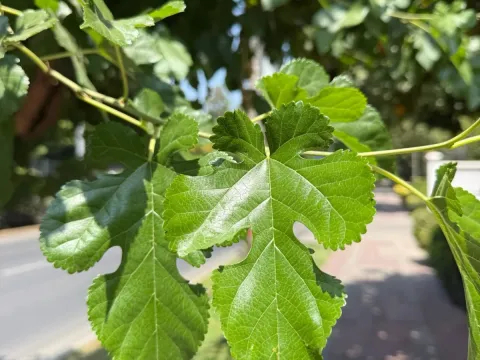
The leaves are the primary feed source for silkworms (Bombyx mori). In sericulture, specialized plantations are maintained with heavy pruning to ensure a constant supply of fresh, tender leaves throughout the silkworm rearing cycle.
Mulberry wood is prized for its high density, durability, and attractive grain pattern. It is widely used in high-end cabinetry, woodturning, and the construction of traditional musical instruments due to its acoustic properties and resistance to decay.
Cylindrosporium leaf spot is a common fungal issue causing premature defoliation. Preventive measures include clearing debris from under the tree during winter and applying appropriate fungicides during the early leaf-out phase.
Powdery mildew can affect the leaves, especially in humid and shaded conditions. It manifests as a white, dusty layer that inhibits photosynthesis; improving air circulation through selective pruning is the most effective cultural control method.
Spider mites are the most common pests that thrive in hot, dry weather. They suck sap from the leaves, causing them to yellow and drop. If infestations are severe, insecticidal soaps or acaricides may be required to protect the tree canopy.
Leaf-eating caterpillars and certain boring insects can weaken the tree structure if left unchecked. Integrated Pest Management (IPM) strategies, including biological controls, are preferred in commercial operations to maintain ecological balance.
Annual sanitary pruning is critical to remove dead, damaged, or diseased wood. Proper pruning wounds should be cleaned and protected to prevent the entry of wood-decay fungi, which can hollow out the trunk over time.
Harvesting mulberry fruit is a delicate process due to the extremely thin skin and perishable nature of the berries. They are usually picked when fully ripe, as they do not ripen further once they have been removed from the branch.
For industrial processing, trees are often shaken over sheets to catch the falling fruit. While efficient, this method is limited to fruit destined for immediate processing, as the handling causes bruising and quick degradation.
Fresh market fruit is harvested manually using small baskets to avoid crushing. Because the fruit is fragile, it is often kept in shallow layers and moved directly into cold storage to prolong its very short shelf life.
Leaf harvesting for sericulture is done by clipping branches or picking leaves manually. The key is to harvest leaves at the optimal nutritional stage, ensuring they are free from moisture to prevent spoilage during storage or shipping.
Fresh mulberry has a shelf life of less than 24 hours at room temperature. To preserve the quality, the fruit should be frozen, dried, or processed into preserves immediately upon harvest to capture its flavor and nutritional profile.