
Red mulberry
Morus rubra L.
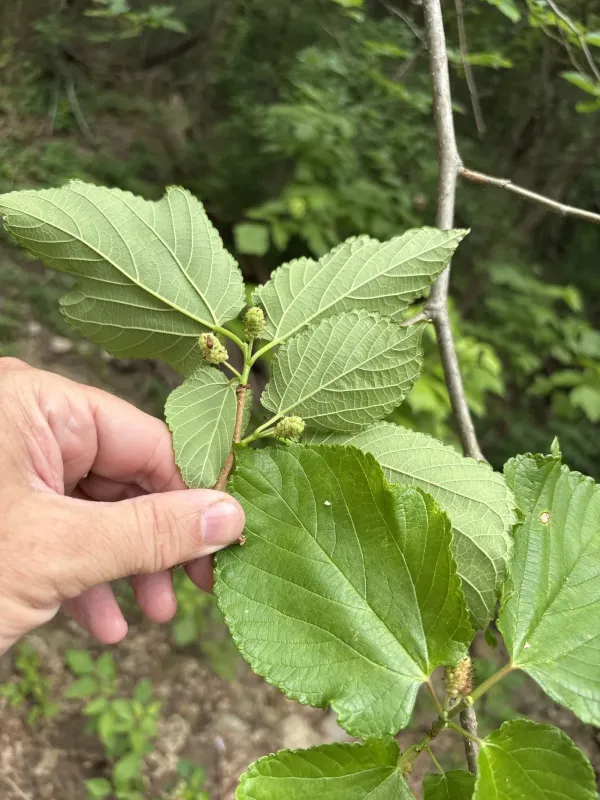
Description
Growing requirements
Red mulberry (Morus rubra L.) is a deciduous tree species in the Moraceae family, native to North America. It is highly valued for its dark, flavorful berries and its role in local ecosystems as a food source for birds and small mammals.
The tree thrives in deep, rich, and well-drained soils. While it shows some tolerance for different soil types, it performs best in slightly acidic to neutral environments with high moisture-holding capacity.
Optimal growth requires full sun exposure, although young trees can tolerate partial shade. Planting in an area with good air circulation helps reduce the risk of foliage diseases and promotes even branch development.
Maintaining adequate soil moisture is essential during the establishment phase. Once mature, the red mulberry displays a moderate level of drought resistance, though supplemental water during dry summers improves fruit size and quality.
Cultural practices include corrective pruning to manage height and remove dead wood. Applying a layer of mulch around the base helps retain moisture and suppresses weeds, contributing to the overall health of the tree.
Yield
The red mulberry typically begins to bear fruit when the tree reaches 5 to 8 years of age. Mature trees can produce significant quantities of fruit, which ripen over several weeks during mid-summer.
Main diseases and pests
Common issues include fungal diseases like powdery mildew and bacterial blight, which can cause leaf drop. Keeping the orchard floor clean and pruning for airflow significantly minimizes the risk of these infections.
Pest threats include mulberry whitefly, mites, and scale insects. Implementing integrated pest management strategies, including the use of horticultural oils and attracting natural predators, helps maintain healthy populations.
Harvesting
Harvesting requires care because the fruit is soft and perishable. Because the berries do not ripen all at once, picking them over several sessions is necessary to capture the entire crop at peak ripeness.
Small-scale growers often use a tarp placed under the canopy to catch berries as they are gently shaken from the branches. The fruit should be consumed or processed immediately to maintain its best quality and flavor.