
Black mulberry
Morus nigra L.
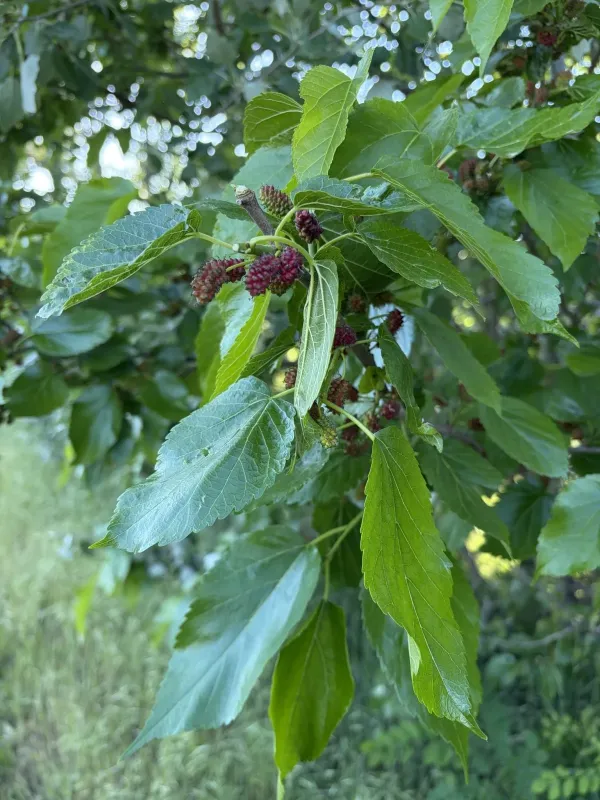
Description
Growing requirements
Black mulberry, botanically known as Morus nigra L., belongs to the Moraceae family. It is a deciduous, slow-growing tree widely recognized for its high-quality, flavorful, and nutrient-dense dark berries, which are significantly more aromatic than those of the white mulberry.
Originating from Western Asia, this species thrives in warm, temperate climates. It prefers sunny, sheltered positions protected from harsh winds and late spring frosts. While it is less cold-hardy than its counterparts, it is highly valued for its longevity and aesthetic appeal.
The tree prefers deep, well-drained, and moderately fertile soils. It is quite adaptable but performs best in loamy substrates with a neutral to slightly alkaline pH. It is crucial to avoid low-lying areas where water may stagnate, as the roots are sensitive to excess moisture.
Cultural practices include occasional pruning to maintain an open canopy, which promotes better air circulation and sunlight penetration. This helps reduce the risk of fungal infections and ensures that all parts of the tree receive adequate energy for fruit production.
Mulching the root area helps retain soil moisture during hot summer months. While established trees are relatively drought-tolerant, consistent watering during the fruit development stage significantly improves the size and quality of the harvest.
Yield
The tree typically begins to bear fruit after five to seven years. A healthy, mature tree can produce a substantial yield, often exceeding 80 kilograms of fruit per season, provided the tree has sufficient space and exposure to full sun.
Main diseases and pests
Common issues include bacterial blight and fungal infections such as powdery mildew or leaf spot. Maintaining good orchard hygiene by removing dead branches and clearing debris around the trunk is the most effective preventative measure against these threats.
Pests like spider mites and scale insects can occasionally affect the tree's vigor. Monitoring the foliage during the growing season is essential; if infestations occur, horticultural oils or appropriate biological controls should be applied during the early stages.
Harvesting
Harvesting is labor-intensive because the berries ripen asynchronously over several weeks. Because they are highly perishable, they should be picked when fully ripe and processed or consumed within 24–48 hours to preserve their quality and nutritional value.