
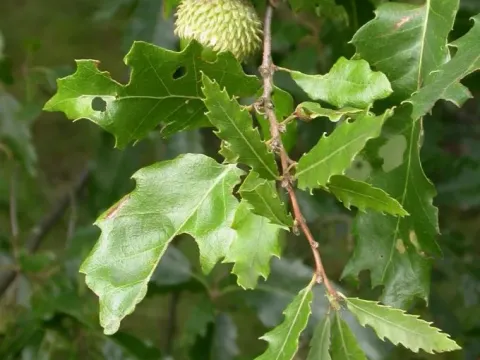
Lebanon oak
Quercus libani
The Lebanon oak (Quercus libani) is a deciduous tree belonging to the Fagaceae family, native to the mountainous regions of the Middle East and the Eastern Mediterranean basin.
What the section contains
Lebanon oak
This species is highly regarded for its attractive, narrow, lanceolate leaves and its ability to adapt to relatively dry climates once the root system is well-established.
In terms of cultivation, it requires well-drained, nutrient-rich soils. It demonstrates good tolerance to rocky substrates, making it suitable for reforestation projects in arid or stony mountainous landscapes.
Regarding climate, the Lebanon oak prefers sunny locations. It is well-suited to zones with hot, dry summers, although it requires protection from severe cold when in the juvenile stage.
From an economic standpoint, the wood of the Lebanon oak is extremely durable and hard, making it a valuable resource for high-quality carpentry, fuel production, and traditional woodcraft.
Common health issues include powdery mildew, a fungal infection that primarily affects the foliage during humid spring seasons, potentially reducing the tree's overall vigor.
Pest threats are frequently associated with various defoliating insects and wood-boring beetles that can inflict structural damage to the trunk if the tree is already stressed.
Root rot pathogens, particularly Phytophthora species, represent a significant danger if the planting site lacks proper drainage, leading to waterlogging of the root zone.
Acorn weevils are a major concern for forest nurseries, as they can significantly impact seed viability and the success rate of propagation efforts.
Effective management includes regular sanitation of the planting area, pruning of damaged branches to prevent fungal entry, and periodic monitoring for early signs of infestations.