
Leather oak
Quercus durata
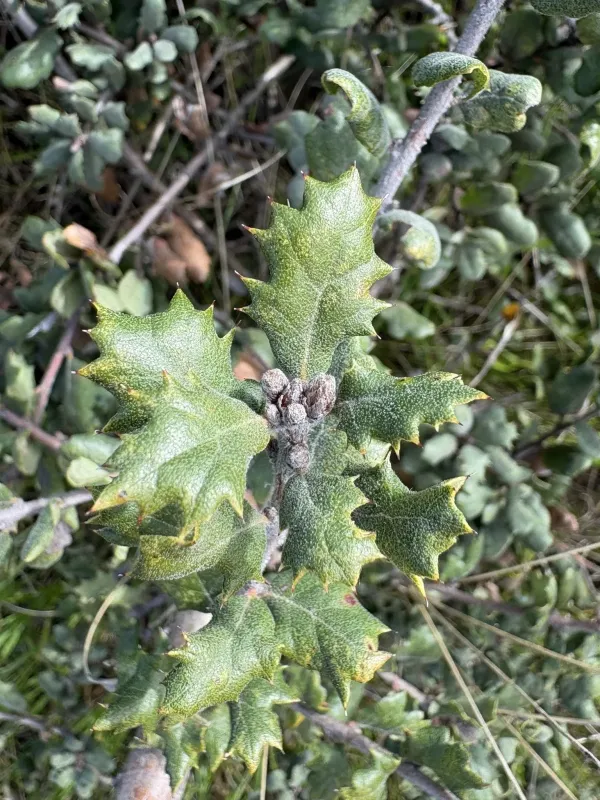
Description
Growing requirements
Leather oak (Quercus durata) is a distinct evergreen shrub species belonging to the Fagaceae family. It is endemic to California, primarily inhabiting chaparral ecosystems where it thrives in challenging environmental conditions.
The plant is biologically adapted to serpentine soils, which are notoriously nutrient-poor and high in magnesium levels. Its ability to colonize these sites makes it a valuable species for restoration projects in areas where other plants fail to survive.
Climatic requirements are defined by the Mediterranean climate cycle, characterized by hot, arid summers and cool, rainy winters. The shrub requires full solar exposure and is highly intolerant to shade, which must be considered when selecting a planting site.
Agricultural management is largely hands-off, focusing on soil conservation. The root system is delicate and prone to damage from cultivation or compaction, suggesting that no-till practices are mandatory for established plantations.
The primary use of this species is ecological restoration, specifically slope stabilization and erosion control. While not a commercial timber crop, its role in biodiversity and soil preservation makes it highly significant for regional agricultural management.
Main diseases and pests
The most significant pathological threat to the species is sudden oak death, caused by Phytophthora species, which aggressively infects the root system and leads to rapid decline under favorable moisture conditions.
Insect pests include various species of gall wasps and weevils that target both the foliage and the acorns. Effective pest management requires regular scouting and removal of infected plant debris to prevent the buildup of pest populations.