
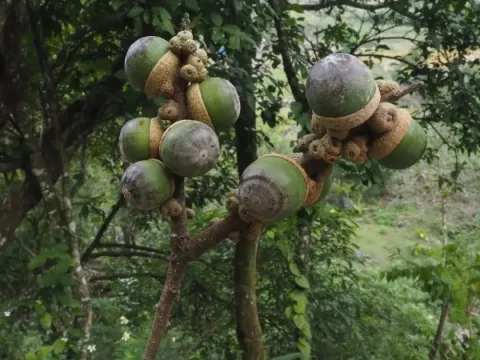
Lithocarpus
Lithocarpus
Lithocarpus is a diverse genus of evergreen trees belonging to the Fagaceae family. Known commonly as "stone oak," these trees are highly valued in forestry for their dense, durable wood, which possesses exceptional physical properties similar to traditional oak timber.
What the section contains
 Celebes stone oak
Lithocarpus celebicus
Celebes stone oak
Lithocarpus celebicus
 Edible lithocarpus
Lithocarpus edulis
Edible lithocarpus
Lithocarpus edulis
 Lithocarpus amygdalifolius
Lithocarpus amygdalifolius
Lithocarpus amygdalifolius
 Lithocarpus bancanus
Lithocarpus cleistocarpus
Lithocarpus cleistocarpus
Lithocarpus coalitus
Lithocarpus coalitus
Lithocarpus bancanus
Lithocarpus bancanus
Lithocarpus cleistocarpus
Lithocarpus cleistocarpus
Lithocarpus coalitus
Lithocarpus coalitus
 Lithocarpus conocarpus
Lithocarpus conocarpus
Lithocarpus conocarpus
 Lithocarpus coopertus
Lithocarpus daphnoideus
Lithocarpus daphnoideus
Lithocarpus coopertus
Lithocarpus coopertus
Lithocarpus daphnoideus
Lithocarpus daphnoideus
 Lithocarpus elegans
Lithocarpus elegans
Lithocarpus elegans
 Lithocarpus encleisocarpus
Lithocarpus encleisocarpus
Lithocarpus encleisocarpus
 Lithocarpus henryi
Lithocarpus hystrix
Lithocarpus hystrix
Lithocarpus javensis
Lithocarpus javensis
Lithocarpus henryi
Lithocarpus henryi
Lithocarpus hystrix
Lithocarpus hystrix
Lithocarpus javensis
Lithocarpus javensis
 Lithocarpus lucidus
Lithocarpus lucidus
Lithocarpus lucidus
 Lithocarpus pachyphyllus
Lithocarpus solerianus
Lithocarpus solerianus
Lithocarpus pachyphyllus
Lithocarpus pachyphyllus
Lithocarpus solerianus
Lithocarpus solerianus
 Lithocarpus sundaicus
Lithocarpus vinkii
Lithocarpus vinkii
Lithocarpus sundaicus
Lithocarpus sundaicus
Lithocarpus vinkii
Lithocarpus vinkii
 Lithocarpus wallichianus
Lithocarpus wallichianus
Lithocarpus wallichianus
 Smooth tanbark-oak
Lithocarpus glaber
Smooth tanbark-oak
Lithocarpus glaber
 Tanoak
Lithocarpus densiflorus
Tanoak
Lithocarpus densiflorus
Lithocarpus
The native range of this genus is primarily focused in the tropical and subtropical regions of Asia. These plants have evolved to thrive in warm, humid forest environments, where they play a significant role in carbon sequestration and soil stabilization.
Successful cultivation requires deep, well-draining, and nutrient-rich soils. The species is highly sensitive to waterlogged conditions, which can lead to root system decay. A neutral or slightly acidic soil profile is generally considered optimal for healthy development.
Climatic requirements involve consistent warmth and high levels of atmospheric humidity. They are not well-suited to regions with severe frost or extreme temperature fluctuations, which can damage juvenile canopy growth and disrupt the maturation process of the wood.
Agronomic maintenance includes periodic organic fertilization and systematic pruning to optimize structural development. Maintaining a consistent moisture level is crucial, as is the use of mulch to preserve soil temperature and moisture throughout the drier months.
The primary threats to Lithocarpus plantations are fungal pathogens, specifically those belonging to the Phytophthora genus. These organisms typically attack when the soil drainage system fails, leading to irreversible root rot.
Stem-boring insects present a persistent challenge, potentially compromising the structural integrity of the timber. These pests thrive in weakened trees, making the maintenance of tree vigor the most effective form of preventative control.
Phytosanitary management is essential for preventing the spread of diseases within the orchard. All tools must be disinfected between trees, and infected plant material should be removed and destroyed immediately to break the cycle of infection.
Leaf-eating insects can cause defoliation if left unchecked, particularly during the rainy season. Monitoring programs utilizing sticky traps and visual inspections help determine if direct intervention with biological controls is necessary.
Sustainable pest management strategies favor the use of natural predators and habitat diversity. By creating a balanced ecosystem, growers can significantly reduce the need for chemical applications while protecting the long-term health of the wood crop.