
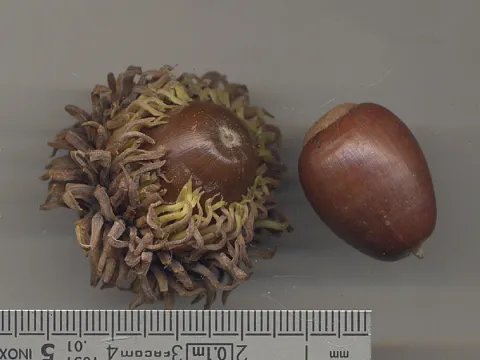
Lebanon oak
Quercus libanerris
Sowing of Lebanon oak acorns is typically performed in the autumn, immediately after harvesting, to allow for natural stratification in the soil. Professional nurseries may also use spring sowing, which requires pre-chilling the seeds at temperatures near freezing to break dormancy.
What the section contains
Lebanon oak
The planting depth is recommended to be between 5 and 8 centimeters, depending on the soil texture. It is crucial to maintain optimal soil moisture, as the embryos of the acorns are highly sensitive to desiccation and can lose their viability very quickly if dried out.
Row spacing in nurseries is usually maintained at 60 to 90 centimeters. This setup allows for the efficient use of mechanical equipment for weeding and soil aeration during the early stages of the tree's growth, which is critical for establishing a strong root system.
Seed selection and grading are essential steps in the nursery process. By removing damaged or malformed acorns, growers ensure a higher success rate and more uniform growth across the plantation, leading to healthier seedlings for reforestation projects.
The optimal time for field sowing is late October in temperate climates. At this time, soil temperatures are low enough to prevent premature germination, allowing the acorns to lie dormant safely until the arrival of favorable spring conditions.
The Lebanon oak, a member of the Fagaceae family, is a hybrid species known for its resilience and adaptability. It thrives best in well-drained loamy or sandy-loam soils that provide a balance of nutrients and adequate aeration for root expansion.
While this species exhibits good drought tolerance once established, young saplings require supplemental irrigation during dry periods. This helps the plant focus its energy on building a deep taproot, which is vital for long-term survival in various environmental conditions.
This species is highly photophilous and requires full sun exposure to maintain its growth rate and vitality. In dense forest stands, canopy thinning is necessary to ensure that individual trees receive sufficient light for optimal photosynthesis and structural development.
Climate requirements for the Lebanon oak are moderate; it prefers regions without extreme winter cold. While it can handle light frost, prolonged freezing of the root zone can be detrimental, so site selection should account for regional temperature fluctuations.
During the active growing season, applying balanced fertilizers can significantly enhance biomass production. Nutrients should be applied in early spring to coincide with the start of leaf development, which promotes a strong and healthy tree crown.
Fungal diseases, particularly powdery mildew, are among the most common threats to Lebanon oak health. This disease causes leaf discoloration and premature dropping, which, if left untreated, can weaken the tree's overall vigor over several seasons.
Insects such as leaf rollers and weevils pose a recurring threat to the foliage and developing acorns. Integrated pest management strategies, including the use of targeted insecticides and pheromone traps, are effective in controlling their population levels.
Root rot, often caused by poor drainage or waterlogging, is a critical issue for this species. If the soil remains saturated for long periods, oxygen deficiency in the rhizosphere occurs, leading to the rapid decline and eventual death of the tree.
Wood-boring beetles can cause severe damage to the trunks, tunneling through the bark and sapwood. This weakens the structural integrity of the tree and provides entry points for various pathogens, necessitating regular health inspections.
Preventive maintenance, including the removal of dead or dying branches, helps reduce the spread of pests and diseases. Maintaining proper spacing and avoiding soil compaction around the base of the trees are essential for long-term health and productivity.