
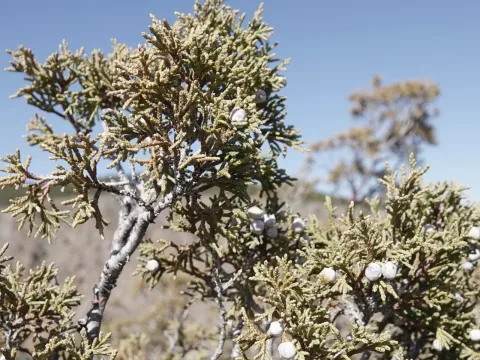
One-seed juniper
Juniperus monosperma
The one-seed juniper (Juniperus monosperma) belongs to the Cupressaceae family. It is a long-lived, hardy evergreen shrub or small tree native to the southwestern United States.
What the section contains
One-seed juniper
This species thrives in open, sunny environments. It is well-adapted to rocky, alkaline soils and is highly valued for its ability to survive in areas with minimal rainfall.
Optimal site conditions require excellent soil drainage to prevent root rot. The plant exhibits high tolerance to cold, making it a reliable choice for high-elevation arid regions.
Cultivation practices are minimal; once established, the plant requires little maintenance, including no regular fertilization or intensive pruning.
The economic and ecological utility of the plant includes soil stabilization, wildlife habitat provision, and ornamental use in xeriscaping and sustainable garden design.
The primary pathogenic threat to the one-seed juniper is cedar-apple rust, a fungal disease that can cause significant foliage damage under humid conditions.
Insect pests such as juniper scale and spider mites are common concerns that can impair the aesthetic and physiological health of the trees.
Root rot caused by Phytophthora species remains the most severe threat, typically triggered by soil waterlogging or excessive irrigation during hot weather.
Management strategies involve rigorous sanitation, such as removing fallen needles and dead branches, as well as applying appropriate fungicides when symptoms appear.
Preventative cultural care, including proper spacing to ensure good air circulation, is the most effective method for maintaining healthy, pest-free juniper populations.