
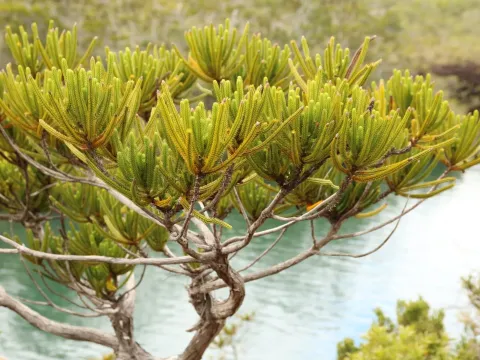
Neocallitropsis
Neocallitropsis
Neocallitropsis is a genus of coniferous trees belonging to the family Cupressaceae. This monotypic genus, represented by Neocallitropsis pancheri, is native to the island of New Caledonia and is known for its rare and distinct morphology.
What the section contains

Neocallitropsis
In its natural habitat, the plant is restricted to ultramafic (serpentine) soils. These soils are characterized by a high concentration of heavy metals, low nitrogen, and low phosphorus, making the plant highly specialized in its nutrient uptake.
The climate requirements for Neocallitropsis involve constant humidity and moderate temperatures typical of subtropical oceanic environments. It does not tolerate frost or arid conditions, which limit its successful cultivation to controlled environments.
For horticultural purposes, the substrate must be highly porous and well-drained. Any accumulation of water around the root collar can be fatal for the specimen, leading to rapid deterioration of the plant's health.
Due to its slow growth rate, the plant is typically utilized in specialized botanical research or rare plant collections rather than large-scale agricultural operations. It requires a dedicated approach to micro-climatic management.
The primary threats to the survival of Neocallitropsis are habitat loss due to forest fires and the high susceptibility of the species to root rot pathogens. In cultivation, improper irrigation is the leading cause of death.
Fungal infections, particularly Phytophthora species, represent the most significant threat to the root system. Once a plant is infected, recovery is rare due to the slow metabolic processes and poor regeneration capacity.
Pests such as spider mites can infest the foliage in greenhouses, causing discoloration and eventual needle drop. Integrated pest management, focusing on biological controls and minimal chemical interference, is recommended.
Soil salinity is a critical factor; even low concentrations of certain minerals found in standard tap water can be toxic to the plant's roots over time. Purified water or collected rainwater is necessary for maintenance.
Physical injuries to the trunk or branches are slow to heal, making the plant vulnerable to secondary wood-decay fungi. Extreme caution is advised during any necessary maintenance or movement of containerized plants.