
Pinchot juniper
Juniperus pinchotii
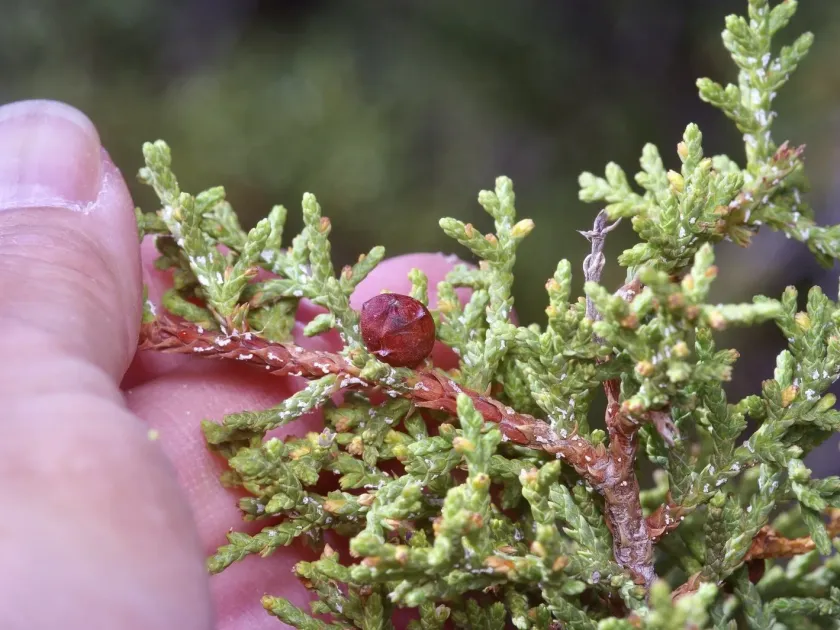
Description
Growing requirements
The Pinchot juniper (Juniperus pinchotii) is a perennial evergreen plant belonging to the Cupressaceae family. In its natural habitat, it grows as a large shrub or a small tree, reaching a height of 2 to 5 meters.
This species is characterized by high ecological plasticity and the ability to thrive in the arid regions of the southwestern United States and northern Mexico. It is perfectly adapted to a semi-arid climate with significant moisture deficits.
For successful cultivation, the crop requires well-drained, nutrient-poor, or calcareous soils. The plant is extremely sensitive to excessive moisture and water stagnation in the root zone, which can lead to severe root rot.
Intense sunlight is the key factor for its growth. Under shaded conditions, the crown loses its decorative density and growth slows significantly, making it unsuitable for cultivation in forests with a dense canopy.
The Pinchot juniper exhibits excellent frost resistance and tolerates the extreme temperature fluctuations typical of foothills and rocky prairies, where it acts as a natural edifier of plant communities.
Main diseases and pests
The main threats to the crop include fungal diseases such as cedar-apple rust, caused by pathogens of the genus Gymnosporangium. These pathogens infect shoots, leading to the formation of characteristic galls and subsequent branch dieback.
Pest insects, including juniper scale and various species of spider mites, can cause significant damage to young plantations, weakening the plant's immunity and reducing its aesthetic value.
Disease prevention consists of adhering to agrotechnical standards: avoiding overcrowded plantings, performing timely sanitary pruning of damaged shoots, and controlling air humidity levels in nurseries.
Chemical control includes the application of systemic fungicides at the first signs of rust infection, as well as the use of insecto-acaricides to monitor pest populations during the growing season.
In the wild, wildfires pose a significant threat, as Juniperus pinchotii contains essential oils that promote rapid combustion, making fire management a necessary requirement for plantation maintenance.
Harvesting
The economic use of this species is mainly focused on erosion control in arid zones and the creation of windbreaks. Due to its extensive root system, it effectively stabilizes unstable slopes and prevents soil degradation.
In breeding and landscaping, the juniper is valued for its low-maintenance nature. Its wood has high density and resistance to decay, which has historically been used for making fence posts and small carpentry items.
Seed harvesting is conducted in late autumn when the cones turn a characteristic bluish-brown color. Stratification of seeds is a mandatory step before sowing to overcome embryo dormancy.
Propagation is also possible via cuttings; however, the process requires the use of rooting stimulants and strict adherence to greenhouse temperature regimes during the first year of the seedling's life.
While the Pinchot juniper does not have mass commercial value as a traditional agricultural crop, it is highly promising for the restoration of degraded lands and urban greening projects amidst changing climate conditions.