
Przewalski juniper
Juniperus przewalskii
Description
Growing requirements
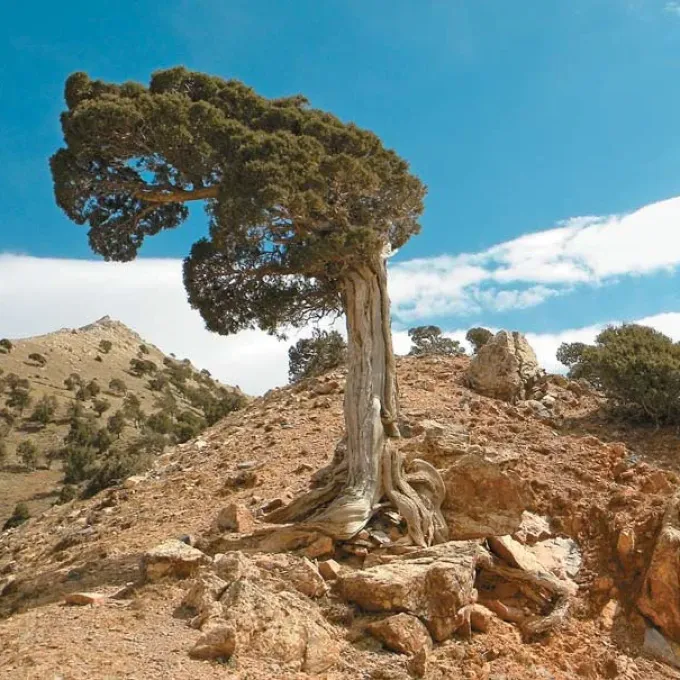
Przewalski juniper (Juniperus przewalskii) is a resilient conifer belonging to the Cupressaceae family, known for its slow growth and impressive adaptation to harsh environments. It typically grows as a small tree or a large, robust shrub with characteristic needle-like and scale-like leaves.
Originating from the high-altitude regions of Central Asia, specifically the Tibetan Plateau, this species has evolved to thrive in cold, wind-swept, and arid habitats. Its historical distribution indicates a high degree of cold hardiness and tolerance to rocky, nutrient-poor soil compositions.
Optimal growth requires well-drained, porous soils. Gardeners should ensure that the planting site prevents water stagnation, as the root system of Juniperus przewalskii is particularly susceptible to root rot in heavy, waterlogged clay soils.
Climatic requirements focus on full solar exposure. It is a highly light-demanding species that will not tolerate shaded conditions, which lead to sparse foliage and increased susceptibility to various physiological stressors.
Agronomic management involves minimal intervention. Once established, the tree is highly drought-tolerant. Maintenance should prioritize avoiding excessive nitrogen fertilization, which can create overly succulent growth that is susceptible to winter damage or opportunistic pathogens.
Main diseases and pests
Pathogenic threats are primarily fungal in nature, including rust diseases and blight, which often appear during periods of high humidity or poor aeration. Maintaining good spacing between plants is a critical cultural practice to mitigate these risks and improve overall plant health.
In terms of insect pests, spider mites and scale insects are the most common concerns. These pests thrive in dry conditions and can cause severe desiccation of the needles. Integrated pest management, involving neem oil or appropriate miticides, should be employed at the first sign of infestation.