
Mountain juniper
Juniperus monticola
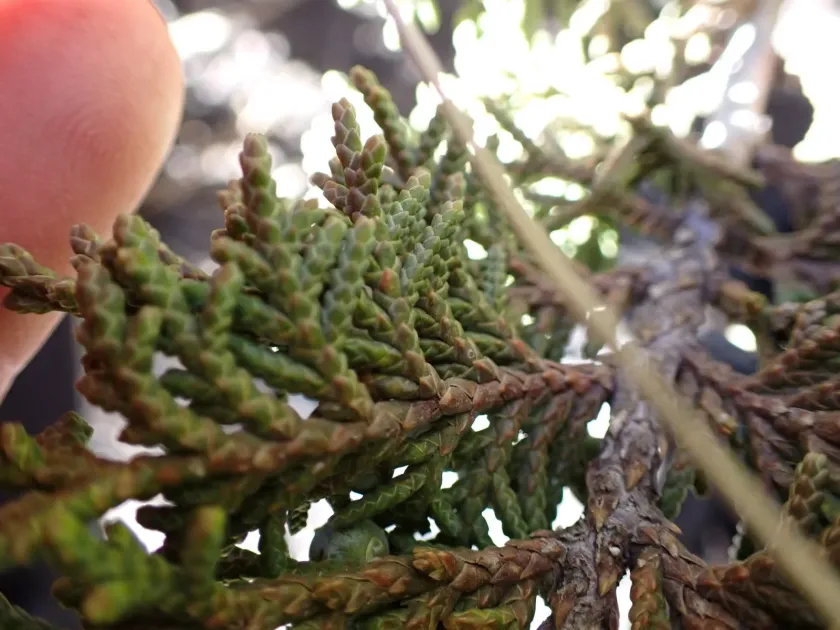
Description
Growing requirements
Mountain juniper (Juniperus monticola) is an evergreen shrub or a small tree belonging to the Cupressaceae family. It is native to the high-altitude mountain ranges of Mexico, where it grows in harsh, rocky terrains and thin soils.
The cultivation of this species requires well-drained, sandy, or rocky soil. It is highly intolerant of waterlogged conditions, which frequently cause root rot, making site preparation with proper drainage essential for survival.
As a species adapted to high-altitude environments, mountain juniper thrives in full sun exposure. Sufficient light is critical for maintaining the dense, characteristic habit of its foliage and preventing the internal browning typical of neglected shade-grown plants.
This species is valued in horticulture for its compact, often procumbent or cushion-like architecture. Due to its slow growth rate, it requires very little maintenance, making it an excellent choice for rock gardens, xeriscaping, or exposed slopes where soil erosion is a concern.
Standard care involves minimal watering once the plant is established. Fertilization should be light, using slow-release fertilizers formulated for conifers to avoid encouraging excessive, weak vegetative growth that may struggle to harden off before winter.
Main diseases and pests
The primary health threats to Juniperus monticola include fungal infections such as juniper blight and rust, which are exacerbated by high humidity and poor air circulation around the canopy.
Pests like spider mites and scale insects are common adversaries. They tend to infest the plant during hot, dry spells, feeding on the sap and leading to discolored and stunted foliage growth.
Integrated pest management suggests starting with cultural controls, such as ensuring proper spacing between plants and avoiding overhead irrigation during the late evening hours.
In cases of heavy infestation, specific miticides and systemic insecticides are required to save the specimen, though these should be applied sparingly to maintain environmental balance.
Regular monitoring of the root crown is advisable to ensure no collar rot is developing, which can occur if mulch is piled too high against the base of the stem.