
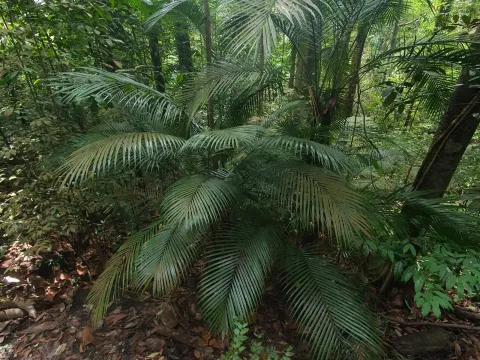
Rhopaloblaste
Rhopaloblaste
Rhopaloblaste is a genus of tall, elegant palms belonging to the Arecaceae family. These plants are native to the tropical rainforests of Southeast Asia, ranging from the Malay Archipelago to the Solomon Islands, where they thrive in high-humidity environments.
What the section contains


Rhopaloblaste
The cultivation of Rhopaloblaste requires a consistent tropical climate. The palm performs best in temperatures between +22°C and +28°C. It is extremely sensitive to cold and cannot withstand temperatures dropping below +15°C for any extended period.
Water requirements are significant, as these palms naturally inhabit areas with frequent rainfall. The soil must remain consistently moist but well-drained, as stagnant water can rapidly lead to root decay, which is a major physiological risk for this species.
In terms of light exposure, Rhopaloblaste species generally prefer bright, filtered light. While they can tolerate some sun as they mature, young specimens require protection from direct, intense sunlight to prevent leaf scorching and desiccation.
The primary use of Rhopaloblaste is ornamental, as it is prized for its aesthetic appeal in tropical landscape architecture. Its slender trunk and broad, graceful fronds make it a preferred specimen for botanical gardens and luxury tropical plantings.
Rhopaloblaste is prone to various fungal pathogens that can develop if soil aeration is insufficient. Root rot is a common issue in overly compacted or waterlogged soils, necessitating the use of specialized drainage layers.
Insect pests, specifically scale insects and spider mites, are common threats. Regular monitoring of the foliage and maintaining optimal atmospheric humidity are the most effective non-chemical strategies for managing these populations.