
Rhopaloblaste ceramica
Rhopaloblaste ceramica
Description
Growing requirements
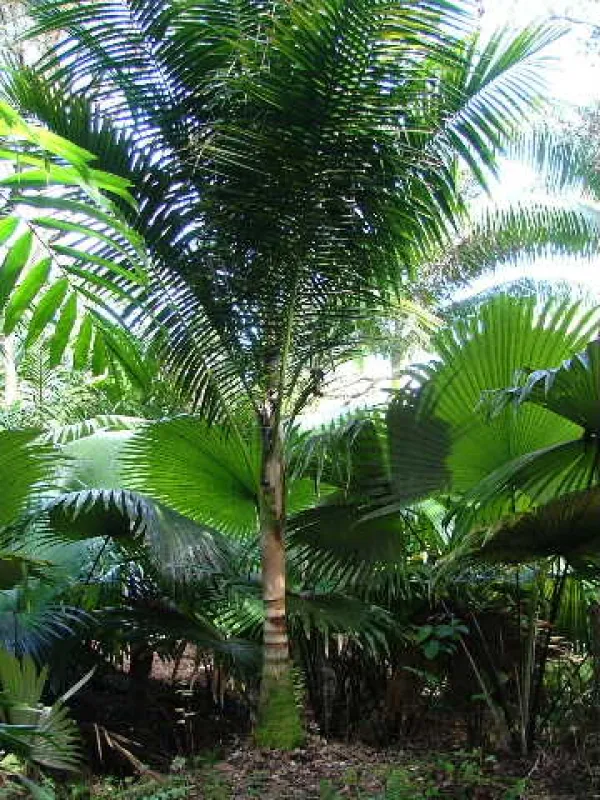
Rhopaloblaste ceramica is a majestic palm species belonging to the Arecaceae family. Native to the Ceram islands in Indonesia, this plant is well-known for its tall, slender trunk and elegant, arching pinnate leaves that add a distinct tropical aesthetic to its environment.
The plant strictly requires a tropical climate to thrive, demanding consistent temperatures between 24°C and 30°C. It has no tolerance for frost, making it suitable exclusively for tropical regions or specialized climate-controlled greenhouses in other parts of the world.
Soil requirements involve well-draining, nutrient-rich substrates that retain moisture without becoming waterlogged. A mixture of peat, loam, and coarse sand or perlite is recommended to balance aeration and moisture retention for healthy root development.
Light exposure is a critical aspect of its care; while seedlings prefer partial shade, mature palms benefit from bright, indirect light. Direct tropical sun can sometimes scorch the leaves if the humidity levels are not sufficient to counteract the heat.
Maintenance techniques include regular fertilization during the active growing season using balanced NPK fertilizers. Because this palm grows slowly, patience is required, and care should be focused on preventing root stress rather than stimulating rapid, forced growth.
Main diseases and pests
Root rot is the most significant threat to Rhopaloblaste ceramica, often caused by overwatering or poor drainage systems. This fungal issue quickly compromises the root system and can lead to the rapid decline of the entire palm.
Common pests include scale insects and mealybugs, which tend to congregate in leaf axils and along the stems. These pests weaken the plant by feeding on its sap and can leave behind sticky honeydew that encourages sooty mold growth.
Spider mites are another prevalent nuisance, particularly in environments with low humidity. Their feeding habits cause chlorotic spots on the fronds, eventually leading to foliage drop if the infestation is not managed promptly.
Thrips may occasionally attack, causing distorted leaf development and silvery patches on the fronds. Regular inspection of the foliage and application of horticultural oils or systemic insecticides are standard methods for control.
To ensure plant health, it is essential to keep the environment well-ventilated and maintain high relative humidity. Routine cleaning of the leaves helps remove dust and creates an unfavorable environment for many typical palm pests.